|
|
|
| For the attention of the Maronite leaderships! |
|
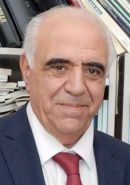
Joseph Kasseifi, Head of the Press Editors Syndicate
4/02/2026
(See translation in Arabic section)
Sydney-Middle East Times Int'l:The late Dr. George Saadeh, former head of the Lebanese Kataeb Party, was among the Maronite politicians known for their foresight and wisdom. He was at the forefront of those striving for Christian unity, considering it the safest and most effective path to building genuine national unity that embodies the Lebanese people's will to live together in a state governed by the rule of law.
In his book, "My Story with Taif," published in 1998 and completed just weeks before his death on November 16 of that year, Saadeh recounts, under the title "Maronite Consensus," how a committee of prominent Maronite religious and civil figures was formed, with the blessing of Patriarch Mar Nasrallah Boutros Sfeir, to achieve this consensus. The committee included Bishop Khalil Abi Nader, Abbot Paul Naaman, former MPs Kabalan Issa Khoury and Antoine Hrawi, Maronite League President Shaker Abu Suleiman, and lawyers George Jabr, Ernest Karam, Simon Boulos, and Ambassador Joey Tabet. This committee drafted a document entitled "The Fundamental Principles of Maronite Accord" and circulated it among the relevant leaders of the community. The document included the following points:
1. The necessity of establishing a consultative Maronite authority.
2. Mutual acceptance and democratic conduct.
3. The use of weapons among Maronites is strictly prohibited, and refraining from bloodshed among them is a sacred oath.
4. Resolving disputes through this authority.
5. Democratic competition is natural, while infighting, the exclusion of others, and personal attacks are forbidden.
6. Ensuring the integrity of Maronite positions in all fields and working to select competent individuals.
Saadeh adds in his book (pages 324 and 325): "The committee encountered considerable difficulties in obtaining the signatures of some Maronite leaders." Among those who signed this document were President Charles Helou, who added to his signature the phrase: “With full support,” President Suleiman Frangieh, who commented: “With approval and best wishes for success,” Samir Geagea, who wrote before signing: “With approval and the hope that this approach will be completed to the end,” and Elie Hobeika. As for myself, I was among those who signed it immediately upon its presentation to me, after noting the following: “How I wish these clauses could have retroactive effect. And what I hope for today is that these clauses will be implemented as quickly as possible.” Saadeh continues in his book: “The committee did not limit itself to the contacts it made in Lebanon, but also appointed a delegation consisting of: Qablan Issa al-Khoury, Ernest Karam, and George Jabr, accompanied by Nimatallah Abi Nasr, who traveled to France, where they met with President Amin Gemayel, General Michel Aoun, and Brigadier General Raymond Eddé.” The members of the delegation, as Saadeh recounts in his book, bitterly described the difficulties they faced and the words they heard, until all three were convinced to sign—not the prepared document, but a separate piece of paper each of them had written. This document did not serve its intended purpose and did not last long. The avoidance of resorting to arms stemmed from the absence of the political climate and the atmosphere conducive to it after the Taif Agreement and the subsequent consolidation of power. However, the political bickering continued, and the desire for unity remained absent among the parties involved. Any convergence on a position or agreement regarding a particular issue was fleeting and ephemeral.
The examples are numerous, too many to mention here. How many times did "drums beat, and lovers parted"? The situation remained unchanged, and "the grudges remained as they were..." as the poet says, even if "pastures grew on the dung heaps of the earth." This discussion is prompted by the unprecedented political escalation between Dr. Samir Geagea, head of the Lebanese Forces party, and Engineer Gebran Bassil, head of the Free Patriotic Movement, and their respective party leaders. This escalation has dominated television screens, radio waves, newspapers, websites, and social media. All that was missing was a declaration of war and a return to street protests. What is happening reminds us of the poet's words: "For fire is kindled by two sticks, and war begins with words."
It is no exaggeration to say that widespread discontent pervades the Christian community, particularly the Maronite community, regarding these ongoing campaigns. Many, both from the elite and ordinary people, are asking:
- Where is the role of the Church and the Maronite monastic orders in all of this?
- Where is the Maronite League and the crucial role it is expected to play in moderating political discourse and fostering rational interaction between the various factions, given that it includes members from all sides?
- Where are the wise and courageous individuals who can speak out against this reality? Christian leaders, especially Maronites, must recognize, or at least acknowledge, the wave of discontent sweeping their communities, and not underestimate it. They cannot resort to inflammatory rhetoric under the pretext of rallying support for the elections or sending a message to one side or another, domestically or internationally.
In conclusion, doesn't this situation demand some action, some initiative? Are there no courageous individuals left to speak out, to issue a warning, to say: Enough is enough! The rope you are pulling at will tighten around your people's necks, and you will face unimaginable and insurmountable damage. |
|
|
|
|
|