| “This is not about defending any particular group. It is about defending the principles that protect all communities in a democratic system. |
|
The Australian Federation of Islamic Councils (AFIC) Wishes to Clarify its Position
19/01/2026
(See translation in Arabic section)
Sydney-Middle East Times Int'l: The
Australian Federation of Islamic Councils (AFIC) wishes to clarify its
position following recent media reporting regarding AFIC’s endorsement
of a joint statement on the Government’s proposed hate group
legislation.
The decision to endorse the statement was made in
accordance with AFIC’s established internal processes. The matter was
discussed within AFIC, including at the Federal Council meeting held
yesterday and there has been no objection to the decision.. Claims of
internal disagreement or “pushback” are incorrect.
The contents of
the endorsed statement are fully consistent with AFIC’s recent public
positions, including the media release issued yesterday. The statement
reflects AFIC’s long-standing concerns about governance, due process,
and the appropriate limits of executive power in a democratic society.
AFIC’s
position is not about Hizb ut-Tahrir itself. Hizb ut-Tahrir is not a
member of AFIC, and AFIC’s endorsement of the statement should not be
read as an endorsement, or otherwise, of that organisation or its views.
As the statement itself makes clear, AFIC’s concern is with principles
of democratic government and the rule of law, particularly the precedent
created by legislation that allows organisations to be designated or
banned through broad, discretionary powers rather than clear legal
thresholds.
AFIC has consistently argued that any laws dealing with
hate or extremism must be tightly framed, grounded in actual criminal
conduct or incitement to violence, and accompanied by strong procedural
safeguards. Legislation that lowers these thresholds, or relies on
politically subjective assessments, risks undermining fundamental legal
protections that all Australians rely on, especially minority
communities.
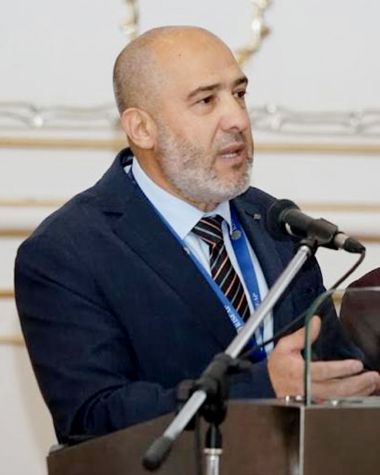
As AFIC President Dr Rateb Jneid stated:
“This is
not about defending any particular group. It is about defending the
principles that protect all communities in a democratic system. Laws
that concentrate broad discretionary power in the executive, without
proper safeguards or consultation, are not good law and should concern
every Australian.”
AFIC stands by its decision to endorse the
statement and by the principles it reflects. AFIC remains committed to
working constructively with government and the broader community to
address hate and social harm, while ensuring that responses are lawful,
proportionate, and consistent with democratic values.
_______________________________________
AFIC,
established in 1964, stands as the Peak Muslim Organisation in
Australia, with 170 members including 9 State and Territory Councils. It
has a rich history of pioneering numerous community services and
actively advocating for the rights and representation of the Muslim
community.
Authorised:
Dr Rateb Jneid, President |