| EDITORIAL: Lebanon Final Choice: One State or Permanent Chaos |
|
EDITORIAL: Lebanon Final Choice: One State or Permanent Chaos
Editor in Chief
23/08/2026
Lebanon stands at a crossroads. In the South, Israel continues its operations, killing civilians, destroying homes and violating ceasefire understandings. Meanwhile, the Lebanese remain trapped between an enemy that disregards sovereignty and armed groups that have confiscated the state’s authority over war and peace.
The return of residents to Zawtar and other southern towns demonstrates courage, but also exposes Lebanon’s tragedy. The Lebanese Army is accompanying families through devastated areas filled with unexploded ordnance. It is attempting to restore security on territory where it has long been denied authority.
This is Lebanon’s central contradiction: the army is expected to defend the border and protect civilians while being prevented from exercising exclusive control over weapons and military decisions.
The problem is not the state seeking to reclaim the South, nor the army performing its constitutional duty. The real problem is every weapon operating outside legitimate authority—every weapon that has seized Lebanon’s sovereign decision and transformed the country into an arena for regional confrontation.
For years, citizens were told these weapons would protect them and deter Israel. Yet questions remain: Did they prevent destruction, displacement and civilian deaths? Did they protect southern villages, or leave residents paying the highest price?
Lebanon has every right to demand that Israel cease its attacks, withdraw from Lebanese territory and respect its sovereignty. But sovereignty cannot be selective. Lebanon cannot demand respect for its borders while tolerating an armed force inside them acting independently of government.
Iran has no right to use Lebanon or Hezbollah’s weapons as leverage in its confrontation with Washington. Lebanese territory must not become a military platform, bargaining card or mailbox for messages exchanged between foreign powers.
Security arrangements in the South will be meaningless if the army’s deployment remains symbolic and negotiations postpone difficult decisions. When the Lebanese Army enters a Lebanese town, it is exercising the state’s constitutional authority. No faction has the right to challenge that role.
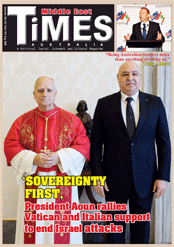
International support, including the Vatican’s backing for President Joseph Aoun, carries significant weight, but cannot replace Lebanese responsibility. National rescue must begin by strengthening the presidency, army and constitutional institutions.
Israel must withdraw, and the international community must guarantee agreements and help rebuild the South. Simultaneously, Lebanon must declare without hesitation: no weapons outside legitimate authority, no war without the state’s decision and no territory beyond army control.
The choice is no longer between resistance and surrender. It is between statehood and chaos, sovereignty and dependency. Lebanon needs one state, one army and one sovereign decision—before it becomes another casualty of the region’s endless wars.
|