|
|
|
| In one of the darkest days of Australian politics, the Helen Haines tragedy confirmed what many feared was only a matter of time |
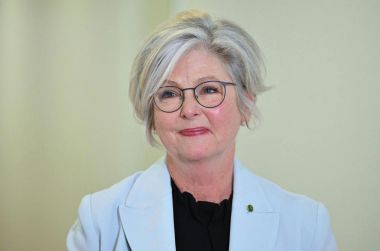
The tragedy that unfolded in Wangaratta has overshadowed Helen
Haine’s work on both the National Anti-Corruption Commission
and her tireless campaigning for better rural mental health services.
Photograph: Mick Tsikas/AAP/AP© Photograph: Mick Tsikas/AAP/AP **
"When engaging with the public becomes a danger to their representatives, democracy is struck at its very heart; nations cannot be protected by normalizing hatred, nor can freedom be upheld by forcing those with a mission to live behind barriers."
|
In one of the darkest days of Australian politics, the Helen Haines tragedy confirmed what many feared was only a matter of time
Story by Tom McIlroy
24 Oct 2026
24/10/2026
(See translation in Arabic section)
Sydney-Middle East Times Int'l: The awful tragedy that occurred in Wangaratta on Monday afternoon overshadowed a story Helen Haines cares deeply about.
Earlier that day, the attorney general announced the appointment of a new boss for the National Anti-Corruption Commission (Nacc), hopefully signalling an end to what has been a difficult foundational period for the watchdog. Haines was the one who forced the establishment of the Nacc on to the political agenda and helped craft its design and oversight.
In recent months, she had worked in the background with Michelle Rowland on possible changes to the Nacc’s operating model, and serves as the deputy chair of the parliamentary committee that signed off on the federal court judge Robert McClelland replacing the tone-deaf former commissioner Paul Brereton.
Related: ‘We can’t just pretend that everything’s OK in the regions’: what went wrong in Wangaratta?
What was Haines’ assessment of McClelland, the former Rudd government attorney general, for the role? He is just what the Nacc needs to reestablish community confidence and effectively root out graft and maladministration.
In a statement issued after she wrapped up a community event in Mansfield, Haines called the appointment a chance to restore credibility and integrity to the commission.
Then all hell broke loose. In one of the darkest days for Australian federal politics, the Indi MP was the target of an alleged deliberate attack outside her electorate office.
In a state and region still struggling from Covid-era frustration and anger, where a dislocated minority of the population don’t believe in the authority of any public official or institution, the horrible injuries suffered by a good-hearted local MP – one that politicians from all sides have called “the best of us” – will reverberate for a long time.
Quick-thinking locals and a speedy response from police and ambulance crews likely stopped a worse outcome for Haines.
It is striking just how few members of parliament were surprised something like this could happen. Many had expected violence would arrive in Australian politics for some time. They were shocked at the senselessness of Haines’ injuries, but not surprised Australia would eventually follow suit with the kind of attacks already being experienced in countries like the US, Britain and Canada.
For those receiving ever more threats and abuse – especially women in parliament and other positions of authority – it was only a matter of time.
The motive of the alleged perpetrator is yet to be established and it appears mental health issues have played a role in what happened. But the pain and reckoning that Monday’s violence has sparked should not lead to complacency about the ongoing risk. It should also serve to highlight the crumbling that is happening around the foundations of our system.
A national debate about appropriate security settings for elected officials is already revealing how complex – and expensive – close protection for 226 federal politicians would be. Many already spend thousands on safety upgrades at their homes and fear for family members, staff and volunteers. Police and security agencies struggle to handle even serious threats or antisocial behaviour at MP’s electorate offices and public events.
MPs this week reported frustration that they were not well-equipped by security agencies to protect themselves. The federal police commissioner, Krissy Barrett, revealed almost every week at least one person is being charged over threats to politicians and high office holders.
Things shouldn’t be this way, and addressing these problems shouldn’t be beyond us as a country.
The way elected officials interact with the public is shifting, too. So far, trying to restore a sense of respect and personal responsibility in political discourse has proved too difficult. The appalling way some people behave in online spaces is seeping into real-life interactions, making some quality candidates reconsider entering or staying in public life.
Informal interactions between voters and their representatives will become rarer as the risks grow.
Politicians’ treatment of their constituents is contributing to a breakdown too. Haines’ success in Indi has been driven in part by her straightforward and down to earth nature. She speaks like a real person and benefits from a substantial career as a nurse, midwife and academic before entering politics, showing up some in Canberra.
When the governor general, Sam Mostyn, spoke to the country alongside Haines’ husband, Phil, on Wednesday night, she called for us all to learn – or relearn – how to “exercise our muscle of decency”. Predictably, Mostyn’s comments ensured she quickly received a barrage of abuse on the very social media channels she is using to try to improve the national debate and demystify our system of government.
For years, Haines has pushed for better mental health services in the regions, including in the towns of her sprawling electorate. She told colleagues constituents struggled to get help for themselves and for loved ones due to a lack of psychologists. Waiting lists outside the big cities were enormous, Haines warned, and the cost of critical services was too high for many people.
Ahead of Friday’s meeting of mental health ministers, former Australian of the Year Patrick McGorry said the current national agreement on mental health and suicide prevention was badly insufficient and needed to overhauled. Better tracking and measurement of the agreement’s goals were needed to track progress around the country.
The worst-case outcome, according to McGorry, is risk from the small number of individuals with acute mental illness who pose a risk to the wider community.
This week’s horror presents far more questions than answers, and legal processes and a long medical recovery will take a long time to play out. But Helen Haines’ example, and that of her dedicated staff and volunteers, should help with the road forward. |
|
|
|
|
|











.jpg)