| The Lebanese Army to Its Detractors: “Try Your Tactics Elsewhere!” |
|
The Lebanese Army to Its Detractors: “Try Your Tactics Elsewhere!”
By Joseph al-Qossaifi
President of the Lebanese Press Editors’ Syndicate
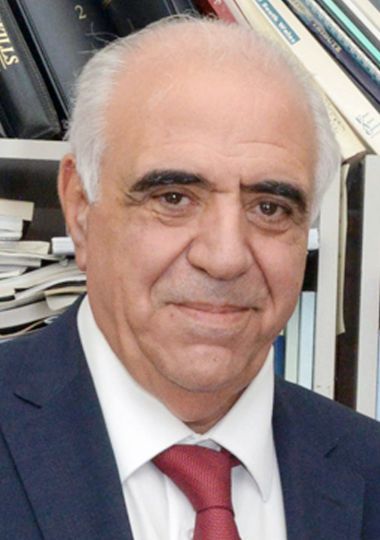
The Lebanese Army has never ceased to be the target of a seemingly organised campaign waged against its commander and the institution by certain hardline zealots who seek backing from extremist circles within the Republican Party. These Americans of Lebanese origin approach the affairs of their ancestral homeland without realism or objectivity, often displaying outright animosity towards both the individual and the institution.
It is clear that some have inherited the mantle of the late Republican Senator Lindsey Graham, who was known for his incitement against Army Commander General Rodolphe Haykal and for his inappropriate conduct towards him during their meeting in Washington before Graham’s death. Every day, as we read statements by someone who has designated himself an activist in the American capital—statements dripping with gossip and malicious accusations, and brimming with advice to senior officials, particularly the President of the Republic, against General Haykal—a picture emerges of a group uninterested in addressing Lebanon’s crisis through wisdom and dialogue or in avoiding courses of action that sound judgement and a sense of national responsibility rule out.
This group is impatient for a confrontation between the army and Hezbollah. It favours elimination over compromise and seeks to push the country towards a devastating internal conflict. The reality, however, is that its members lack the influence to persuade the US administration to change its plans to support the Lebanese Army, even at a minimal level. This is not only because of their marginal role, confined to limited media appearances provided by outlets and platforms—mostly local—that share their extremism and recklessness. It is also because Washington’s political and military leaderships are unconvinced by their pretexts and proposals, and do not share their assessment of either the army commander or the policies pursued by the military institution.
Perhaps the clearest evidence that their demands are neither heeded nor given weight is the continuation of the US military assistance programme for the army, alongside ongoing military coordination and regular meetings with US Central Command (CENTCOM). This situation would not continue—at least at its present pace—if Washington had reservations about the Lebanese Army’s performance.
An official familiar with the army’s role at this stage says that, in addition to external and internal incitement, whether coordinated or coincidental, the construction of “scenarios” around the motives behind PEGASUS CEDAR 2026, the joint Lebanese-British military exercise, appears far from innocent. These narratives link the exercise to a plan being prepared for the period following UNIFIL’s withdrawal.
But the response is clear: exercises of this kind began in 2023, before the developments that have since unfolded—and continue to unfold—in the region. The purpose of all this is to undermine the army and place it under political and psychological siege, because each side wants it to carry out an “agenda” that serves its own interests. Yet the army adheres only to the “agenda” of Lebanon and its legitimate state, following principles that strengthen state authority while preserving civil peace, the unity of the country’s territory and people, and its institutions, regardless of other calculations, whether marginal or otherwise.
The campaigns against the army, its leadership and the institution itself are therefore like someone trying to shatter a rock by butting their head against it: they can neither weaken it nor divert it from its assigned mission.
Anyone who puts a question to a senior figure connected to the military institution receives the same answer: “We have seen a great deal. We have suffered a great deal. We have been targeted repeatedly. And we are still standing.”
He concluded: “Let them try their tactics elsewhere.” |



.jpg)







.jpg)