| The next question is whether the pause around Beirut can be turned into something broader and more durable. |
** For now, Israel is still striking the south, Hezbollah is still watching events on the ground, and both sides appear to be testing whether limited restraint can hold.
|
Israel Pulled Back From Beirut but Not From the War
4/06/2026
(See translation in Arabic section)
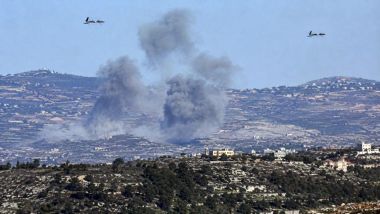
Sydney-Middle East Times Int'l: Israel continued airstrikes and artillery fire in southern Lebanon on June 2, even after President Donald Trump urged Prime Minister Benjamin Netanyahu not to attack Beirut in order to prevent further escalation. Lebanon’s government said Israel would refrain from carrying out threatened strikes on Hezbollah-controlled southern suburbs of Beirut, while Hezbollah would halt attacks on Israel.
That spared Beirut from what many feared could become a much broader escalation. But it did not bring real calm, because the war in the south kept going and the sound of Israeli drones over Beirut left many residents convinced the pause could still collapse.
Southern Lebanon Remains the Main Battlefield
Reuters reported that Israeli strikes and shelling hit a string of towns in southern Lebanon, while the Israeli military ordered residents of Nabatiyeh to leave ahead of further attacks. Hezbollah said it carried out two operations against Israeli forces in southern Lebanon early Tuesday, though Reuters said there were no cross-border rocket attacks reported from the group at that stage.
That distinction matters. The immediate Beirut crisis may have eased, but the core conflict in southern Lebanon is still active, deadly and capable of reigniting a broader confrontation at any moment.
Israel Is Warning Beirut Could Still Be Hit
Israeli Defense Minister Israel Katz said the test would be simple: if attacks on Israeli communities stop, the current policy holds, but if attacks continue, Israel could strike Beirut’s southern suburbs. Reuters reported that the Israeli military also said it intercepted two projectiles crossing from Lebanon into Israeli territory overnight.
That means the decision to hold off on Beirut was not a final reversal. It was a conditional pause tied directly to whether Hezbollah’s fire remains limited or resumes.
Washington Talks Aim to Reinforce a Partial Ceasefire
Lebanese and Israeli officials began talks in Washington on Tuesday, with Lebanon saying it wanted to expand the ceasefire. A senior Lebanese official told Reuters the goal was to agree on practical, sustainable ways to reinforce the truce, possibly through phased “pilot zones” where hostilities would stop, Israeli troops would withdraw and Lebanese soldiers would deploy.
Reuters also reported that Hezbollah had not publicly endorsed the partial ceasefire and said it would not take a formal position without a declaration requiring a comprehensive cessation of hostilities across all Lebanese territory.
What Comes Next
The next question is whether the pause around Beirut can be turned into something broader and more durable. For now, Israel is still striking the south, Hezbollah is still watching events on the ground, and both sides appear to be testing whether limited restraint can hold.
That leaves Lebanon in an uneasy middle ground: Beirut has been spared for the moment, but the wider war is still very much alive. Until fighting in the south eases as well, the latest step back looks more like a temporary brake than a true ceasefire.
|