|
|
|
| NSW Liberals Pledge to “Build Again” as Labor Accused of Stalling the State’s Future |
** Sloane's speech presented a stark contrast between what was described as
the Liberal Party's tradition of building, investing, and planning, and
what was described as the Labor Party's record of delay and inertia.
|
NSW Liberals Pledge to “Build Again” as Labor Accused of Stalling the State’s Future
30/05/2026
(See translation in Arabic section)
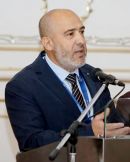
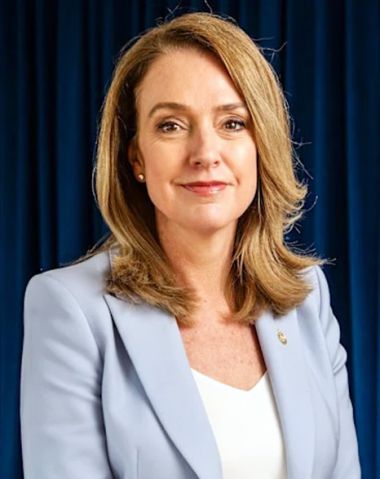
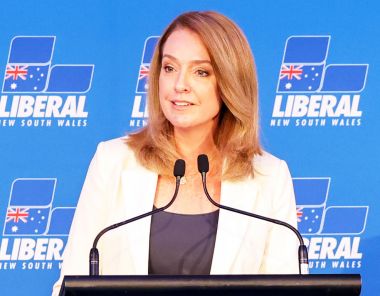
Sydney-Middle East Times Int'l: New South Wales Liberal Party leader Kelly Sloane delivered a powerful and ambitious speech to the party's federal council in Melbourne, declaring that New South Wales is at a critical juncture and warning that the state risks losing its economic strength, infrastructure momentum, and public trust under the current Labor government.
Addressing party delegates and members, Sloane described the upcoming New South Wales general election, scheduled for March of next year, as "one of the most important state elections of our time." The speech contrasted what she termed the Liberal Party's tradition of building, investing, and planning for the next generation with what she characterized as Labor's record of delays, stagnation, and a decline in ambition.
A key theme of the speech was the slowdown in construction, housing, and major infrastructure development. The speaker recalled a recent visit to Bosley Park in western Sydney, describing her view of vast swathes of land littered with unused scaffolding and cranes—a “graveyard of potential”—as a symbol of a state where development has stalled. The image was used to underscore that New South Wales, once renowned for its cranes, subway networks, hospitals, and major projects, has lost momentum.
Sloane accused Premier Chris Minns and the NSW Labor Party of “stifling” the economy, planning, and future growth. She claimed that Labor’s housing promises had not been fulfilled, with NSW allegedly 40% behind the Housing Agreement targets. She also criticized new taxes on the construction sector, warning that they would increase housing costs at a time when families and young professionals are already struggling to enter the job market.
Infrastructure was another key focus. The opposition leader argued that the Maines government had slashed billions of dollars in future spending on healthcare and transport infrastructure and had failed to commit to new metro projects beyond those planned and budgeted for by previous Liberal governments. The speech emphasized that a government's vision should not be limited to inaugurating projects inherited from previous administrations.
** The New South Wales Liberal leader also criticized Labor at both the state and federal levels regarding the Goods and Services Tax (GST) and infrastructure funding, arguing that New South Wales had been denied its fair share of funding by the Canberra government. According to the speech, New South Wales currently receives only 82 cents for every dollar collected in GST, compared to $1.06 for Victoria. She pointed out that despite having 1.5 million more residents than Victoria, New South Wales would receive $7.1 billion less over the next four years. Regarding infrastructure funding, the speech indicated that New South Wales would receive $11.7 billion over the next four years, compared to $15.6 billion for Victoria and $20.4 billion for Queensland.
Sloane emphasized that if New South Wales received its fair share, it could fund six new hospitals or partner with the federal government to build a new metro line, better connecting communities to employment and housing opportunities. This was used to reinforce the broader message that New South Wales needed leadership capable of advocating for the state's interests and delivering better outcomes.
A historical comparison further underscored the ambitious message of the speech. Referring to the start of the Sydney Harbour Bridge project 123 years ago, the leader reminded the audience that large-scale projects have often been criticized for being too ambitious, too expensive, or too difficult to implement. The speech noted that similar opposition had been leveled at the Sydney Metro and WestConnex projects, which now serve thousands of people. The speech framed this date as proof that leadership requires the courage to build for the future, not just manage the present. In contrast, Premier Mainz faced criticism for his remarks about the metro in 2032, with the speaker suggesting they revealed a lack of long-term vision that transcended the political cycle.
The speech then addressed the human impact of economic pressures, highlighting young professionals who feel that owning a home in Sydney is becoming increasingly unattainable, a mother in southwest Sydney struggling to balance a city job, a long commute, and raising her children, and a father from west Sydney named Ishaan, who now works as an Uber driver on weekends because "there's nothing left to cut" from the family budget.
Despite the criticism, the speech sought to offer an optimistic vision for the future. The New South Wales Labor leader stated that the Liberal Party was in a minority government and needed to win six more seats to retain its current number. The party hall was described as "fully governable," bringing together experienced former ministers and fresh candidates, including millennials, women, urban and rural MPs, older people, and young singles.
The closing message was a call for renewal. Opposition Leader Sloane said the Liberal Party campaign must move beyond slogans, anger, and division, and instead focus on building, restoring trust, and instilling hope. She called for supporting businesses, celebrating ambition, reducing government control over the economy, investing in infrastructure that boosts productivity, thinking beyond the next election, and looking toward the next generation.
Ms. Sloane concluded with a confident declaration that New South Wales' best days are still ahead—but only if the state chooses leadership with conviction, courage, and optimism. |
|
|
|
|
|