 | “Attacks on mosques should not be taken lightly, as threatening the safety of worshippers represents...”
| | |  | “I finally ate normally and felt better every day,” – Elissar Nakouzi, crediting Brother Estephan Nehme.
| | |  | “The new footbridge makes it safer and easier for our community to connect and enjoy the park.” — Cr Martin Zaiter
| | | .jpg) | Bibi Netanyahu, You Stand Guilty
| | |  | St. Rita Feast Day Mass Berrima
| | |  | “Social cohesion cannot be used as a justification to silence disagreement,” Dr Jneid said.
| | |  | For the attention of the Maronite leaderships!
| | |  | “Patriarch Estephan Doueihi: A Saint of Unity, Faith, and Lebanon’s Enduring Spirit”
| | |  | "Matters should be dealt with in the courts, not in political speeches or indefinite detention...".
| | |  | Statement from Major General Ashraf Rifi – Attacking religious authorities is a red line!
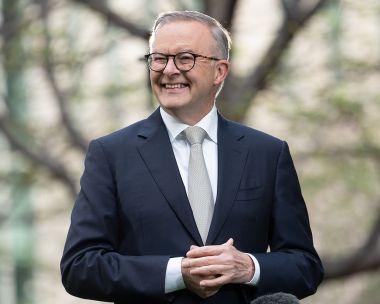
| | |  | "In times of tragedy, we find strength in unity, and from that strength, progress is born." – Prime Minister Anthony Albanese
| | |  | An Unanswered Question
| | | |
|
|
| Building a Fairer, Stronger, and More Resilient Australia |
** The government’s response, he said, is to demonstrate the power of
government to reshape systems, deliver meaningful reforms, and create a
fairer society. PM Albanese said.
|
Building a Fairer, Stronger, and More Resilient Australia
14 May 2026
(See translation in Arabic section)
Sydney-Middle East Times Int'l: In his speech at the re-launch of the Chifley Research Centre, the Prime Minister Anthony Albanese MP, highlighted the critical role of progressive advocacy in shaping national debates in an increasingly diverse and fragmented media landscape. He emphasized that governments can no longer rely on traditional channels or assume that the public will automatically engage with policy discussions. In this environment, organisations like the Chifley Research Centre play a vital role in presenting thoughtful, evidence-based arguments to the public. The Prime Minister underscored that economic reform must be communicated clearly and personally, showing Australians the tangible benefits of government policies.
The Prime Minister provided a concrete example of this approach by sharing a visit with the Treasurer, the Housing Minister, and a young couple, Matt and Mika, who had benefited from the government’s five percent deposit scheme. By putting a human face on the reform, the government demonstrates how policies make real differences in people’s lives, enabling first-time buyers to achieve the Australian dream of home ownership. The Prime Minister stressed that government reform should go beyond platforms and press releases—it must actively improve people’s lives and restore their confidence in the system.
At the heart of the government’s agenda, the Prime Minister explained, is a commitment to addressing economic inequality and ensuring that hard work leads to fair reward. Australians increasingly feel that the economy does not work for them, that wealth is concentrated, and that opportunity is slipping out of reach. The government’s response, he said, is to demonstrate the power of government to reshape systems, deliver meaningful reforms, and create a fairer society. He noted that recent economic challenges, including global fuel price spikes and strained supply chains, highlight the structural weaknesses in Australia’s economy caused by decades of offshoring manufacturing, reducing vocational training, and closing key domestic facilities. These developments present an opportunity to build a stronger, more sovereign, and more resilient economy.
The Prime Minister outlined the government’s vision for national resilience, emphasizing domestic production, skills development, innovation, and international partnerships. Initiatives include investments in fuel and energy security, permanent government-owned fuel reserves, domestic gas reservations, and support for small businesses through permanent tax measures, R&D incentives, and asset write-offs. By boosting productivity, these reforms aim to empower Australians to participate more fully in the economy and share in its success.
Central to the speech was the government’s commitment to home ownership as a foundation of personal security and generational opportunity. Drawing on Ben Chifley’s historic observation that housing is “not only the need but the right of every citizen,” the Prime Minister underscored that the government’s reforms aim to make home ownership achievable for more Australians. Policies under the Homes for Australia plan include incentives for apprenticeships in construction, the delivery of 100,000 homes for first-time buyers, and social and affordable housing programs like Build to Rent and the Housing Australia Future Fund. These reforms aim to rebalance the tax system, addressing advantages long held by property investors that have widened intergenerational inequality in housing access.
The Prime Minister highlighted the personal impact of these reforms through the story of the Kingston couple, whose lives were transformed by access to affordable housing. By supporting first-time buyers and ensuring that investment in new homes benefits the broader community, the government is fostering both supply and aspiration, demonstrating a commitment to fairness across generations. He criticized opposition parties for their resistance to reforms, noting that they consistently campaign against solutions that address entrenched inequities, including tax cuts and housing reforms, and seek to preserve a system that disadvantages ordinary Australians.
Throughout the speech, the Prime Minister drew parallels between the government’s current policies and the vision of Ben Chifley, emphasizing the enduring relevance of Chifley’s principles. He recalled Chifley’s words from 1949, noting the importance of solving national challenges and taking responsibility to secure Australia’s future: “We should accept as a common aim the future greatness and security of Australia, and as a common responsibility that it rests with us in our own generation to do our utmost to achieve these things.” The Prime Minister stressed that, despite the changes of eight decades, the same values—investment in national resilience, confidence in Australians’ abilities, and a commitment to future generations—underpin the government’s reforms today.
In conclusion, the speech reinforced the government’s focus on practical reforms that empower Australians, build resilience, and ensure fairness across generations. From energy security and small business support to tax cuts and housing reforms, the Prime Minister positioned the Labor government as the party that actively expands opportunity and upholds the Australian dream. By putting people at the center of policy, the government aims to strengthen not only the economy but also the social fabric of the nation, ensuring that Australians today—and in the generations to come—can share in prosperity and security.
|
|
|
|
|
|