|
|
|
| Pope Leo XIV’s First Year: The Audacity of Unarmed Peace |
** "Peace is not naïve; it is the audacity of the human heart to choose life over destruction." — Pope Leo XIV
|
Pope Leo XIV’s First Year: The Audacity of Unarmed Peace
08/05/2026
(See translation in Arabic section)
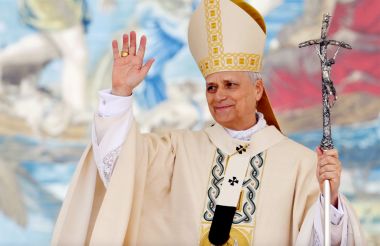
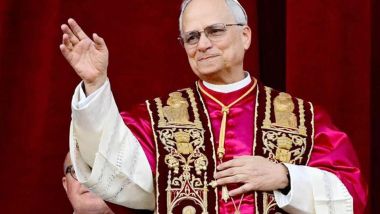
Sydney-Middle East Times Int'l: In his first year as Bishop of Rome, Pope Leo XIV has issued over 400 appeals for peace, urging reconciliation that is “unarmed and disarming.” From the very beginning of his pontificate, he has implored the so-called “lords of war” to listen to “a melody greater than ourselves,” emphasizing that true peace arises not from ceasefires or political agreements, but from the courage to heal, forgive, and act with love.
On 8 May 2025, at sunset on the day of his inauguration, Pope Leo outlined a vision of harmony that is vibrant, active, and life-affirming. During the Urbi et Orbi Blessing on Christmas Day, he described this “wild peace,” inspired by poet Yehuda Amichai, as a force that springs up suddenly like flowers breaking through concrete. “May it come,” the Pope said, “because the field needs it.” This metaphor, repeated in different addresses throughout his first year, became a central image of his message: peace is stubborn, resilient, and beautiful even in the most unlikely circumstances.
The word “peace” has appeared more than 400 times in Pope Leo’s addresses over the year, applied in contexts as diverse as journalism, humanitarian work, and international diplomacy. Speaking to the press in the Paul VI Hall, he encouraged journalists to foster communication that transcends ideological divides: a language capable of lifting humanity out of the “Tower of Babel” of confusion and partisan rhetoric. “You are on the front lines,” he said, “reporting wars and uncovering aspirations for reconciliation within them. Your words can guide us out of the noise of loveless languages.”
Pope Leo has consistently challenged the powers that fuel war, highlighting both human and financial costs. Addressing the Reunion of Aid Agencies for the Oriental Churches (ROACO), he pointed to the paradox of global military spending versus humanitarian need. “People are beginning to realize the amount of money that ends up in the pockets of merchants of death,” he said. “Money that could be used to build hospitals and schools is instead being used to destroy those that already exist.” He emphasized that it takes only moments to destroy but often lifetimes to rebuild, urging leaders to take responsibility for the suffering caused by their choices.
From Vatican audiences to African cathedrals, Pope Leo’s message spans continents, bending toward the vulnerable and war-torn. In Bamenda, Cameroon, he released a dove as a symbol of peace, emphasizing that reconciliation reaches beyond the corridors of power to touch the lives of those who “feed only on despair, tears, and misery.” In every address, he balanced the gravity of war with the hope of transformation, insisting that peace begins in the human heart and radiates outward.
Holy Week marked a moral high point of his appeals. On Palm Sunday, he declared that no war can be justified in God’s name: “God does not listen to the prayer of those who wage war, and rejects it, saying: ‘Even though you multiply your prayers, I will not listen; your hands are full of blood.’” Those who enslave themselves to power or wealth, he warned, create “mute, blind, and deaf idols” that perpetuate conflict. Through these words, he reminded humanity that violence cannot be sanctified and that divine love demands compassion, justice, and mercy. 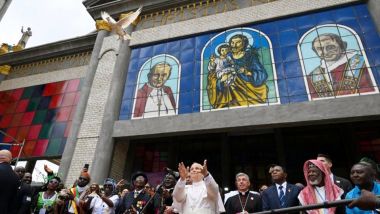 Pope Leo releases a dove as a symbol of peace in Cameroon (@Vatican Media) Yet Pope Leo’s vision carries a lightness alongside its moral weight. In Lebanon, he described harmony that “does not tread upon the earth except to dance to the rhythm of music,” portraying peace as both a journey and a celebration of life. His message for the 59th World Day of Peace—“toward a peace that is unarmed and disarming”—underscores this delicate balance between action and hope. Peace, he argued, is not passive; it is a daring, active commitment to reconciliation, even when circumstances make it seem impossible.
The Pope has confronted the stark realities of modern warfare. With global military spending reaching 2.718 trillion dollars in 2024, he urged leaders to “lay down your sword” and embrace the “audacity of disarmament.” Weapons may have evolved—from swords to drones—but the human cost of conflict remains tragically unchanged. He warned that war is not a distant abstraction; its consequences are hunger, disease, displacement, and shattered communities, and the world cannot grow accustomed to such suffering.
Recognizing alternative paths to reconciliation, Pope Leo has emphasized the transformative power of sport, culture, and education. At a General Audience, he observed that Christians conquer evil not through force, “but by fully accepting the weakness of love.” Education, memory, and contemplation are essential to prevent the repetition of past tragedies, ensuring humanity does not forget the lessons of the twentieth century and its millions of victims. Through culture and reflection, he urged societies to cultivate empathy, restore trust, and build sustainable peace from the ground up.
Throughout his first year, Pope Leo XIV has embodied a vision of peace that is bold yet tender, global yet intimate. He calls for harmony that is not passive but persistent, like a wild flower growing through concrete. His words challenge the world to see beyond destruction and embrace the audacity to choose life, reconciliation, and hope.
In the Pope’s own words: “After centuries of history, how can anyone believe that acts of war bring about peace and not backfire on those who commit them?” With over 400 appeals for peace in just twelve months, Pope Leo XIV reminds the world that even amidst despair, the courage to reconcile is the greatest melody humanity can hear—a melody that asks us to bend toward one another, unarmed, and with hearts open to the beauty of life. |
|
|
|
|
|