|
|
|
| Washington’s Double Game: Iran Returns to the Regional Table While Lebanon Remains Under Fire |
** The true test of the agreement will not be the electronic signatures
exchanged between the two presidents. It will be whether the guns fall
silent in southern Lebanon and Beirut.
|
Washington’s Double Game: Iran Returns to the Regional Table While Lebanon Remains Under Fire
18/06/2026
(See translation in Arabic section)
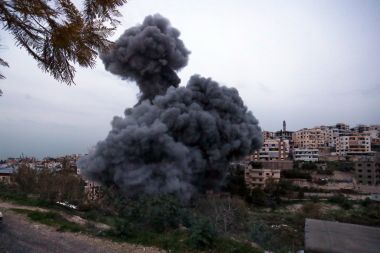
Sydney-Middle East Times Int'l: The emerging understanding between the United States and Iran has opened one of the most complex and controversial chapters in the Middle East’s recent political landscape. At first glance, the scene appears contradictory, perhaps even confusing. On one side, Washington seems to be moving toward a ceasefire arrangement with Tehran, opening the door to negotiations, possible sanctions relief, reconstruction funding and renewed economic engagement. On the other side, Israel continues its military campaign against Hezbollah in southern Lebanon, while Hezbollah remains one of Iran’s most important regional allies.
This raises the central question: how can the United States pursue an agreement with Iran while allowing, or at least failing to stop, a campaign against Iran’s strongest ally in Lebanon?
The answer lies in the way Washington is trying to separate the region’s crises into different files. The United States appears to be treating the nuclear question, the Strait of Hormuz, oil flows and the danger of a broader regional war as urgent priorities. Lebanon and Hezbollah, however, remain part of a separate and unresolved security file — one that Israel refuses to place fully under American-Iranian negotiation.
This is why the current moment is both significant and dangerous. A ceasefire understanding between Washington and Tehran may reduce one front, but it does not automatically calm the others. It may even increase pressure on Lebanon if Israel believes it must act more aggressively before Iran regains political and economic strength.
According to the material provided, the agreement between President Donald Trump and the Iranian side was signed electronically and behind closed doors, without the public ceremony normally associated with such a major diplomatic development. This is unusual for a president who often presents himself as a peacemaker and who traditionally prefers high-profile images of diplomatic success. The quiet nature of the signing suggests that Washington understands the political sensitivity of the deal and the criticism it may provoke at home and abroad.
The reason for this caution appears clear. The memorandum of understanding does not seem to represent a final settlement. Rather, it appears to be a framework designed to stop the immediate slide toward wider war, reopen economic channels, and postpone the hardest disputes for further negotiations. In political terms, this may be practical. In strategic terms, it is risky.
The agreement, as described in the provided material, includes a 60-day negotiation period on sensitive issues, while also opening the door to economic benefits for Iran, including the possibility of a massive reconstruction fund. This is why critics are calling it a climbdown by Washington. They argue that Iran may receive economic relief before providing final guarantees on its nuclear program, missile capabilities or regional influence.
** This is where the apparent contradiction becomes clearer. President Trump may be seeking to end the direct confrontation with Iran because the cost of continuing the war has become too high — economically, militarily and politically. The Strait of Hormuz, global oil markets, American casualties, regional instability and domestic political pressure all create powerful incentives for Washington to find a way out. But ending a direct confrontation with Iran does not mean the United States has resolved Iran’s regional role. It only means Washington has chosen to freeze one crisis while leaving others unsettled.
Lebanon is now at the centre of this unresolved contradiction.
Israel’s campaign against Hezbollah in southern Lebanon is not a minor side issue. It is directly connected to Iran’s regional strategy. Hezbollah is not simply a Lebanese political and military movement; it is also a central pillar of Iran’s regional influence. For Israel, Hezbollah represents a permanent threat on its northern border. For Iran, Hezbollah represents deterrence, leverage and strategic depth. For Lebanon, however, the consequences are devastating: military escalation, political paralysis, economic fear, displacement and the constant risk of wider destruction.
Prime Minister Benjamin Netanyahu’s position appears to be that Israel is not bound by any agreement signed between Washington and Tehran. Since Israel is not a signatory to the US-Iran memorandum, Netanyahu can argue that Israel retains full freedom of action against Hezbollah. This creates the greatest threat to the agreement’s success. If Israel continues bombing southern Lebanon and Beirut, Iran may face pressure to respond directly or indirectly. If Hezbollah escalates, the ceasefire atmosphere between Washington and Tehran could collapse. If Washington tries to restrain Israel too strongly, it risks a major clash with its closest regional ally.
** This is why the question of whether President Trump can pressure Netanyahu is so important. The issue is not only military; it is political. Netanyahu cannot easily appear as though he is taking orders from Washington, especially if he believes Hezbollah remains a direct threat. At the same time, Trump cannot present himself as the architect of a historic peace agreement if Israel continues military operations that undermine the deal’s regional logic. Lebanon issue may create an additional issue to the Palestine issue in the Middle East and the world.
Another layer of contradiction is President Trump’s reported suggestion that Syrian President Ahmad al-Sharaa could play a role in confronting Hezbollah inside Lebanon. On the surface, this appears difficult to reconcile with Washington’s simultaneous move toward a ceasefire understanding with Tehran. If Iran is being brought back into negotiations as a regional player, how can Washington at the same time encourage pressure on Iran’s strongest Lebanese ally through Syria? The answer may be that Trump is attempting to separate Iran as a negotiating state from Hezbollah as an armed regional actor. In other words, Washington may be prepared to deal with Tehran on nuclear, oil and maritime issues, while still trying to weaken Iran’s military influence in Lebanon.
But this strategy is extremely risky. Asking Syria to enter the Lebanese equation revives painful historical memories of Syrian intervention in Lebanon and could inflame sectarian tensions rather than solve them. It also complicates Trump’s ability to pressure Netanyahu: if Washington is asking Syria to act against Hezbollah, Israel may argue that its own military campaign remains justified until Hezbollah is weakened. As a result, this clash of interests does not make pressure on Netanyahu impossible, but it certainly makes it harder, more sensitive and far less straightforward.
The contradiction is therefore not only between Washington and Tehran, but inside Washington’s own strategy: negotiating with Iran on one front, while seeking to contain Iran’s allies on another.
The success of the US-Iran arrangement may therefore depend not only on Tehran’s behaviour, but also on Israel’s willingness to limit its campaign in Lebanon. That is a very fragile foundation.
The material provided also notes that President Trump’s public language toward Iran has shifted dramatically. Just days earlier, Iran’s leaders were described in hostile terms. Yet in later remarks, Trump appeared to describe them as smart and pragmatic, even suggesting that other nations also possess civilian nuclear programs and missile capabilities. Such statements have caused concern among members of Congress and foreign policy observers, who are asking what exactly has changed and what the war has achieved.
This shift in language matters. In diplomacy, words are not incidental. When an American president moves from confrontation to praise, from pressure to negotiation, from sanctions to reconstruction discussions, it signals a strategic recalibration. It suggests that Washington may have concluded that Iran cannot be defeated or isolated without unacceptable costs. Instead, Iran must be managed, contained and brought into a framework that reduces immediate threats to global energy and American interests.
But this approach carries a heavy price. It may be seen by regional allies as rewarding Iran after a costly confrontation. It may also alarm Gulf states, which have paid a high price during the conflict and now fear that their security can be compromised by decisions made in Washington without sufficient warning. The provided material mentions the vulnerability of Middle Eastern countries during the war and the damage caused by ballistic missiles despite the presence of advanced defence systems.
This is one of the most important strategic lessons from the crisis. The war demonstrated that even powerful missile defence systems cannot provide complete protection. Some missiles get through. Infrastructure can be damaged. Energy facilities can be disrupted. And countries that rely heavily on American protection may discover that Washington’s decisions are driven first by American interests, not always by the concerns of its regional partners.
** The Strait of Hormuz is another central issue. The material describes how Iran’s ability to disrupt or threaten traffic through the Strait changed the strategic balance. Even if only a limited number of mines were placed, the psychological and economic impact was enormous. Maritime traffic slowed, energy markets reacted, and the world was reminded that Iran retains powerful leverage over one of the most important waterways on earth.
The statement “let the oil flow” may sound simple, but reopening the Strait of Hormuz is not merely a technical matter. It requires security guarantees, mine-clearing operations, military escorts, regional coordination and political trust. Even after the waterway is reopened, the lesson remains: Iran has shown that it can threaten global energy movement when it chooses. That “genie” is difficult to put back into the bottle.
For Gulf countries, this will likely accelerate efforts to reduce dependence on the Strait of Hormuz. Saudi Arabia has already invested in alternative routes to the Red Sea. Other Gulf states may now intensify plans for pipelines, ports and energy export routes that bypass the Strait. This will require enormous investment, but the strategic logic is clear: no country wants its national economy to remain hostage to one narrow maritime passage vulnerable to conflict.
Yet infrastructure alone will not solve the problem. The deeper question is security. If Iran retains missiles, proxies and maritime leverage, and if Washington is willing to negotiate under pressure, regional states will begin reassessing their long-term defence strategies. Some may deepen cooperation with the United States. Others may diversify partnerships. Some may pursue more independent defence capabilities. The crisis has exposed the limits of old assumptions.
For the United Kingdom and other Western powers, the implications are also serious. The provided material notes that Britain lacks a fully developed missile defence structure and that the threat from Russia is far more advanced than the threat posed by Iran. If Iranian missiles could expose vulnerabilities in the Middle East, then Russian missiles represent an even greater challenge for Europe.
Thus, the US-Iran framework is not only a Middle Eastern event. It is also a global warning about missile warfare, energy security, alliance reliability and the limits of deterrence.
Still, Lebanon remains the immediate flashpoint.
If Netanyahu continues operations in southern Lebanon and Beirut, Trump’s agreement with Iran will face a severe test. Iran may not want to return to direct war, especially if it stands to gain economically from the deal. But Iran cannot easily abandon Hezbollah without weakening its entire regional posture. Hezbollah, for its part, cannot appear passive if Israel continues attacks. Lebanon’s government, already under immense pressure, may find itself unable to control events on its own territory.
This is the tragedy of Lebanon’s position. The country is often treated as a battlefield for others. Decisions are made in Washington, Tehran, Tel Aviv and other capitals, while Lebanese civilians pay the price. Any serious regional settlement must therefore include Lebanon’s sovereignty, security and stability. A deal that ignores Lebanon may stop one war temporarily, but it will not create peace.
The real question is whether the United States is willing to draw a line. Can Washington tell Israel that continued escalation in Lebanon risks destroying the broader agreement? Can Trump pressure Netanyahu without appearing to abandon Israel? Can he convince Iran that Hezbollah must not use Lebanon as a platform for renewed confrontation? Can he support the Lebanese state in a way that strengthens national institutions rather than leaving the country trapped between Israeli strikes, Hezbollah’s weapons and regional calculations?
** These are not easy questions. But without answers, the US-Iran deal may remain incomplete.
The contradiction, then, is not accidental. It reflects the reality of American policy in the region. Washington is trying to achieve several goals at once: avoid a wider war, restore oil flows, prevent nuclear escalation, protect Israel, contain Iran, reassure Gulf partners and avoid domestic political damage. These goals do not always align. Sometimes they clash directly.
The ceasefire with Iran may calm markets and reduce the danger of immediate regional war. But if Hezbollah remains outside the framework and Israel continues its campaign, Lebanon may become the place where the agreement is tested — and possibly broken.
This is why the coming weeks will be decisive. The 60-day negotiation period may provide a diplomatic window, but windows can close quickly. Any major strike in Lebanon, any Hezbollah response, any attack on maritime routes, or any political crisis in Israel or Washington could transform the deal from a diplomatic breakthrough into a failed experiment.
For Trump, the challenge is clear. He can claim he has ended one war only if he prevents the connected conflicts from reigniting it. He can present himself as a peacemaker only if the agreement produces stability beyond paper commitments. He can argue that engagement with Iran is necessary only if Iran’s regional behaviour is also addressed.
For Netanyahu, the challenge is different. He must decide whether Israel’s immediate security campaign against Hezbollah is worth risking a broader diplomatic arrangement backed by Washington. If he continues without limits, he may weaken Trump’s ability to sustain the deal. If he pauses or reduces operations, he may face criticism at home for allowing Hezbollah to regroup.
For Iran, the agreement offers opportunity and danger. Economic relief and diplomatic recognition may strengthen Tehran’s position. But if Iran overplays its hand — through Hezbollah, missiles or pressure on Hormuz — it may provoke a renewed confrontation.
For Syria, any role in Lebanon would carry its own dangers. Damascus may see an opportunity to regain regional relevance after years of isolation and internal conflict, but any Syrian military involvement in Lebanon would revive memories that many Lebanese communities have not forgotten. Even if Washington sees Syria as a useful counterweight to Hezbollah, Lebanon may view such a move as a threat to its sovereignty rather than a solution to its security crisis.
For Lebanon, the stakes are existential. The country needs stability, sovereignty and relief from becoming an arena for regional conflict. Yet it remains caught between an armed Hezbollah, Israeli military pressure, Iranian influence, possible Syrian involvement and uncertain American diplomacy.
The coming phase will reveal whether the US-Iran agreement is a genuine step toward de-escalation or merely a temporary pause before the next explosion. The fact that the agreement was signed quietly, without celebration, may itself be the strongest sign of its fragility. Great diplomatic achievements are usually displayed proudly. Fragile compromises are often hidden behind closed doors.
In the end, the apparent contradiction can be explained by one reality: Washington is not making peace with the region as a whole. It is trying to manage separate crises one at a time. But the Middle East does not always allow crises to remain separate. Iran, Hezbollah, Lebanon, Israel, Syria, the Gulf and the Strait of Hormuz are all connected. A fire in one arena can quickly ignite another.
Therefore, the real test of the agreement will not be the electronic signatures of two presidents. It will be whether the guns fall silent in southern Lebanon and Beirut, whether the Strait of Hormuz remains open, whether Iran accepts real limits, whether Israel accepts restraint, whether Syria stays out of Lebanon’s internal battlefield, and whether Lebanon is allowed to breathe.
Until then, the deal remains not a final peace — but a dangerous gamble. |
|
|
|
|
|