| Hormuz’s 48-Hour Clock: An Iranian Test of Washington or a Gateway to a Broader Settlement? |
** “Reopening Hormuz may ease the pressure of the crisis, but the real test lies in turning the first step into mutual commitments. A waterway can reopen by decree; trust cannot be built on a deadline.”
|
Hormuz’s 48-Hour Clock: An Iranian Test of Washington or a Gateway to a Broader Settlement?
3/11/2026
(See translation in Arabic section)
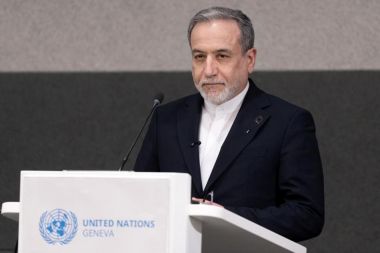
Sydney-Middle East Times Int'l: Iranian Foreign Minister Abbas Araghchi’s remarks about progress in diplomatic contacts, without a final resolution, open a diplomatic window worth watching. They do not, however, mean that a settlement is assured. Iran’s offer to reopen the Strait of Hormuz within two days, provided Washington takes action first, brings the central dispute into sharp focus: who moves first, and what guarantees does the other side receive?
According to Araghchi’s remarks reported by The New Arab, consultations with mediators, including Qatar and Pakistan, helped shorten the proposed timetable from seven days to two. Under the proposed framework, the United States would take the required measures on the first day, followed by the reopening of the strait on the second. This remains a conditional negotiating proposal, rather than a final agreement announced by both sides.
The shorter timetable can be interpreted as Iranian flexibility over implementation, without necessarily signalling concessions on its underlying demands. Tehran is seeking to demonstrate that it can move quickly, while making its action conditional on prior American measures.
From a negotiating perspective, this sequence allows Iran to argue that Washington holds the key to a breakthrough. Yet it presents the US administration with a corresponding dilemma: how can it take a politically defensible first step while ensuring that Iran subsequently fulfils its commitment?
This is the central obstacle. The issue extends beyond the number of hours involved to defining the required measures, verifying their implementation and agreeing on what happens if either side delays or disputes the meaning of its obligations.
** Araghchi’s comments indicate a distinction between resolving the immediate question of the strait and negotiating broader disputes. Iran proposes addressing Hormuz first, before moving on to other outstanding issues, particularly sanctions and the nuclear programme.
Analytically, this separation could allow a limited breakthrough without waiting for a comprehensive agreement that would be difficult to achieve quickly. Easing tensions around shipping could give mediators additional time and create a shared interest in protecting the diplomatic process.
The danger, however, is that any improvement could prove temporary if each side believes it has fulfilled its obligations without receiving the expected concessions in return. Any interim arrangement therefore needs clear rules to prevent the strait from returning to the centre of confrontation at the first political disagreement.
Even if an understanding is reached, a political announcement that the strait has reopened would not, by itself, restore normal activity. Shipping companies and insurers need confidence that passage is safe and will remain so, alongside clarity over the procedures governing navigation.
A distinction must therefore be drawn between the timetable for implementing political measures and the time required for commercial activity to stabilise. Success would be measured by ships passing safely and regularly, and by the agreement’s ability to withstand incidents and renewed tensions.
Gulf security also directly affects the interests of regional states, making consultation with them important to the durability of any arrangements. A US–Iranian understanding could open the door, but regional stability requires a broader foundation of reassurance and shared interests.
The first possibility is acceptance of clear, reciprocal measures that lead to the reopening of the strait and give negotiations fresh momentum. In this scenario, a limited agreement would provide a successful test of whether more complicated disputes could also be addressed.
The second is a continued exchange of proposals without agreement on the sequence of implementation. Positive statements would continue, while a practical deal remained out of reach.
The third is a breakdown in contacts, whether because of disagreements over conditions and guarantees or a development on the ground that undermines confidence and brings escalation back to the forefront.
The 48-hour offer thus presents a meaningful opportunity to test whether diplomatic messages can become concrete action. It does not justify declaring a comprehensive settlement imminent. The decisive question is not simply whether Hormuz can reopen within two days, but whether Washington and Tehran are prepared to build an arrangement that keeps it open after the deadline has passed. |