|
|
|
| Switzerland Talks Face First Major Test as Lebanon, Hormuz and Israeli Pressure Threaten U.S.-Iran Roadmap |
** Lebanon and Hormuz have already become the real test of whether the U.S.-Iran understanding can survive the pressure of war
|
Switzerland Talks Face First Major Test as Lebanon, Hormuz and Israeli Pressure Threaten U.S.-Iran Roadmap
23/06/2026
(See translation in Arabic section)
Sydney-Middle East Times Int'l: The latest round of U.S.-Iran talks in Switzerland has opened under intense regional pressure, as renewed fighting in Lebanon, tensions over the Strait of Hormuz and Israeli concerns threaten to weaken a fragile diplomatic process before it has had time to mature.
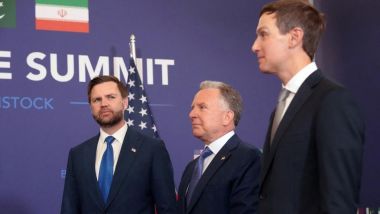
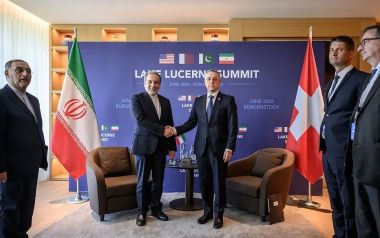
The talks, held at Switzerland’s luxury Bürgenstock resort, follow a memorandum of understanding signed by Washington and Tehran after nearly 40 days of fighting and a shaky ceasefire. According to mediators from Pakistan and Qatar, the two sides have agreed on a roadmap aimed at reaching a final deal within 60 days. Technical discussions are expected to continue, with working groups focused on nuclear issues, sanctions relief, the Strait of Hormuz and mechanisms to prevent miscalculation.
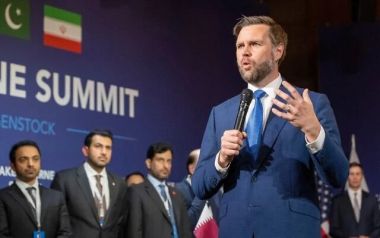
** ** Vice President JD Vance described the meeting as an important first step, saying the sides had laid “a very good foundation for a successful final deal.” He compared the process to building a house, saying the foundation had been laid, but the final structure still needed to be constructed. Washington also announced a temporary suspension of sanctions on Iranian oil, allowing Tehran to produce, sell and deliver crude oil and related products until August 21. The U.S. Treasury linked this decision to Iran’s commitment to free and open transit through the Strait of Hormuz and to its willingness to allow International Atomic Energy Agency inspectors to return.
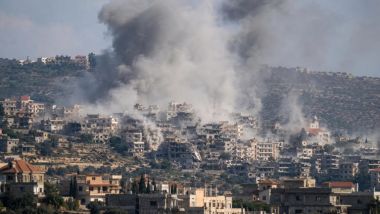
However, the optimism surrounding the talks was quickly overshadowed by events in Lebanon. A new ceasefire between Israel and Hezbollah, which began on June 19, collapsed within hours. Israel said it had come under Hezbollah fire and responded with strikes in southern Lebanon. Israeli accounts reported that around 50 projectiles were launched, killing one Israeli soldier and wounding others. Hezbollah and allied Lebanese reporting presented a different account, portraying the renewed exchanges as a response to Israeli actions on the ground.
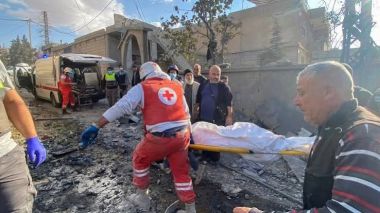
Whatever the precise sequence of events, the result was clear: the ceasefire failed almost immediately. Israeli strikes in southern Lebanon killed multiple people after the truce took effect, exposing the deep mistrust between the two sides and raising serious questions about whether Lebanon can be stabilized while regional negotiations continue.
This matters because Lebanon is no longer a separate military front. It has become directly linked to the U.S.-Iran diplomatic process. Tehran has accused Israel of undermining the talks through its actions in Lebanon, arguing that Israeli operations weaken the conditions needed for meaningful progress with Washington. The strongest verified conclusion is that Israeli military action is complicating the talks and that Iran is openly blaming Israel for this pressure. Whether Israel is deliberately trying to sabotage the process remains an accusation and interpretation rather than an independently established fact.
The Lebanon front is especially sensitive because Hezbollah remains Iran’s most important regional ally and one of the most powerful armed actors in the Middle East. Any agreement between Washington and Tehran that ignores Hezbollah’s weapons, Israel’s military freedom of action, and Lebanon’s sovereignty risks becoming unstable. For Lebanon, the danger is that it becomes the testing ground for every unresolved issue between Iran, Israel and the United States.
** To manage this risk, mediators said the parties had agreed to establish a “de-confliction cell” involving relevant actors and Lebanese authorities to prevent fighting from erupting again. This mechanism is designed to avoid incidents, reduce miscommunication and preserve the broader diplomatic track. Yet its success will depend on whether Israel, Hezbollah, Iran and the United States are all willing to restrain their actions during a highly fragile period.
Israeli Prime Minister Benjamin Netanyahu has already signaled deep reservations. He insisted that Israeli troops must retain “full freedom of action” to thwart any direct or developing threat in southern Lebanon. This position places Israel at odds with any diplomatic formula that requires restraint, especially if that formula is tied to U.S.-Iran understandings. It also complicates Washington’s role, because the United States is trying to negotiate with Iran while also managing Israel’s security concerns and preventing Lebanon from sliding back into wider war.
The situation in the Strait of Hormuz has added another dangerous layer. Iran claimed it had closed the strait in response to Israeli attacks in Lebanon and alleged ceasefire violations. The United States disputed the practical impact of that claim, and vessel tracking data showed ships were still passing through the waterway. Yet even the threat of closure is enough to alarm global markets. Hormuz remains one of the world’s most important oil and gas corridors, and any disruption can quickly transform a regional crisis into a global economic emergency.
** For Iran, Hormuz is not only a security card but also a bargaining tool. Tehran appears determined to link the waterway to any broader deal, especially as it seeks sanctions relief, access to frozen assets and economic reconstruction. Iranian Foreign Minister Abbas Araghchi claimed that oil and petrochemical exports were being waived, blockades lifted, some frozen assets released and a major reconstruction and development plan launched for Iran. Washington, however, has been more cautious. Vance insisted that Iranian assets had not yet been unfrozen and said that, if released, they would be used for purposes such as purchasing American goods, not funding terrorism.
The nuclear file also remains uncertain. Vance said Tehran had agreed to invite IAEA inspectors back into the country, calling this a major milestone and a first step toward permanently denuclearising Iran. But Iranian Foreign Ministry spokesman Esmaeil Baqaei offered a narrower description, saying only a very brief discussion had taken place on the nuclear issue and that no details had been discussed. This difference in tone shows that both sides may be presenting the talks to their domestic audiences in different ways.
The return of inspectors would be significant, especially after Tehran suspended some cooperation and restricted access to key nuclear sites bombed by the U.S. and Israel during the 2025 war. Still, a temporary gesture is not the same as a final agreement. The real test will be whether Iran allows sustained monitoring and whether Washington provides sanctions relief in stages that are politically acceptable at home and credible to Tehran.
** Lebanon’s human and economic cost also cannot be separated from the diplomacy. The overall death toll from the fighting in Lebanon has surpassed 4,100, according to the health ministry. A survey by the UN Development Programme and Lebanon’s National Council for Scientific Research estimated damage to buildings in southern Lebanon at around $1.38 billion. These figures underline the devastating price Lebanon continues to pay as a battlefield for regional confrontation.
The coming days will therefore be decisive. If the ceasefire in Lebanon can be restored and the Strait of Hormuz remains open, the Switzerland talks may gain momentum. If Israeli operations continue, Hezbollah responds, or Iran escalates in the Gulf, the diplomatic roadmap could collapse before technical negotiations reach any serious stage.
For now, the Switzerland meeting represents both an opportunity and a warning. The opportunity lies in the possibility of a structured U.S.-Iran agreement covering sanctions, nuclear inspections, regional de-escalation and maritime security. The warning is that no agreement can survive if Lebanon remains on fire and if Hormuz is repeatedly used as a pressure point.
The strongest conclusion is that diplomacy has begun, but it is already being tested by war. Israel’s actions in Lebanon are complicating the process, Iran is using those actions to increase pressure, and Washington is trying to hold together a fragile framework that depends on restraint from actors who do not fully trust one another. In this environment, the Switzerland talks are not simply about Iran and the United States. They are about whether the region can step back from the edge before one front ignites all the others.
|
|
|
|
|
|