Australia’s Immigration Debate: Values, Integration, and the Path Forward
16/04/2026
(See translation in Arabic section)
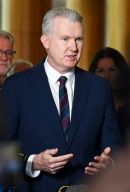
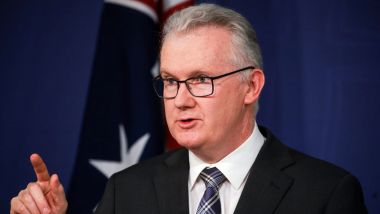
Sydney-Middle East Times Int'l: In the midst of Australia’s ever-evolving debate on immigration, a recent press conference by Tony Burke, the Minister for Home Affairs, cast a spotlight on the nation’s immigration policies. The heated exchange came after the opposition leader, Angus Taylor, unveiled his party’s new immigration proposal—a policy that has caused a ripple in the political and social spheres. In a clear and forceful response, Burke dissected the opposition's immigration stance, underscoring the importance of a balanced, values-driven approach to welcoming migrants into the country.
Immigration and Australia’s National Identity
At the heart of Burke's argument is the essential understanding that immigration, far from being a source of division, is a cornerstone of modern Australian identity. For decades, Australia has prided itself on being a multicultural society, one that has consistently integrated individuals from various corners of the globe.
Burke: The opposition's proposal is nothing more than a political
maneuver aimed at appealing to the far right of the electorate,
particularly One Nation voters. In his speech, Burke highlighted the diverse makeup of Australia’s workforce, pointing out that significant percentages of people in critical sectors—like healthcare, construction, and trades—are born overseas. “Half of our doctors are born overseas, 43% of our nurses are born overseas, and 28% of people working in building and plumbing trades are born overseas," Burke emphasized. This statement is not just a recognition of the contributions migrants make, but a call to understand how vital immigration is for the continued success of the country.
By focusing on the tangible benefits of immigration, Burke challenged the opposition’s narrative that immigration has negatively impacted sectors like housing, healthcare, and education. While the opposition has argued for stricter immigration measures, often appealing to populist sentiments about national security and integration, Burke’s response was rooted in pragmatism. He stressed that without immigration, the very systems Australians depend on would falter.
The Opposition's Policy: A Closer Look
In his critique of the opposition’s immigration policy, Burke was pointed and direct. He criticized the opposition’s proposals for being lacking in detail and substance. "There’s not one line in that speech that delivers an extra job, not one line that builds an extra home, not one line that makes us any safer," Burke remarked.
"It’s not about where you come from, it’s about who you are,"
Burke said, praising immigrants from countries like China
and Vietnam for their contributions to Australia’s prosperity. One of the most contentious aspects of the opposition's policy was their focus on the so-called "character test"—a provision that, they claimed, would prevent people who did not meet certain moral or ideological standards from gaining entry to the country. Burke, however, questioned the need for further tightening of these powers, given that the Minister for Immigration already holds extensive authority under the Migration Act to refuse or cancel visas based on character issues.
This line of argument prompted Burke to challenge the opposition to provide concrete examples of individuals who have been allowed to stay in Australia despite failing the existing character tests. His contention was clear: the issue is not the rules themselves, but how they are enforced. He argued that the current system already has adequate safeguards, and that the opposition’s proposal was, in essence, a political ploy designed to appeal to the far-right faction of the electorate, particularly One Nation voters.
Liberal Democracy and Immigration: A Question of Values
One of the more striking points in the opposition's proposal, according to Burke, was the notion that migrants from liberal democracies are somehow more deserving of Australian citizenship than those from countries with different political systems. Burke was unequivocal in his rejection of this view, explaining that Australia's strength lies in its ability to judge people based on their individual character rather than their country of origin.
His message was clear: Australians must not fall into the
trap of blaming vulnerable groups for political gain. “It’s not about where you come from, but who you are,” Burke stated firmly. He pointed to the contributions of Australians from countries like China and Vietnam—nations that are not liberal democracies—who have made Australia a better, more prosperous place. The Vietnamese community, in particular, was a key example for Burke, as he referenced the 50th anniversary of the Vietnamese migration wave to Australia.
The suggestion that migrants from non-liberal democracies are somehow less likely to integrate into Australian society was not just a political misstep, but a fundamental misunderstanding of what it means to be Australian. Burke argued that Australia’s multicultural society is precisely what makes the country strong, with a diverse array of perspectives contributing to the nation's vibrant culture.
Immigration and National Security
National security is a major concern in any debate about immigration, and the issue of potential extremists or individuals with dangerous intentions entering the country remains at the forefront. The opposition’s policy touched on the need for tighter border control, yet Burke reassured the public that the Australian government takes security very seriously. He described the robust security checks that are part of the visa process, particularly in light of the refugee crisis in Gaza.
Burke highlighted the meticulous security protocols that migrants, especially those from conflict zones, are subjected to. He pointed out that no group has been subjected to more security checks than the cohort of refugees coming from Gaza, where every visa applicant has been thoroughly vetted by Australian intelligence agencies, including ASIO. This example was intended to reassure Australians that national security remains a top priority for the government.
Burke urged unity, calling for Australians to resist divisive
rhetoric and acknowledge the important role immigrants
have played in shaping the nation. However, Burke also warned against the dangerous politicization of security issues. He pointed to the ongoing demonization of certain migrant groups, citing as an example the opposition’s treatment of Palestinians fleeing conflict in Gaza. His message was clear: Australians should not fall into the trap of scapegoating vulnerable people for political gain.
The Housing Crisis and Immigration: A Balancing Act
One of the key criticisms leveled at the government by the opposition has been the strain that high levels of immigration have placed on Australia’s housing market. The housing crisis, particularly in major cities like Sydney and Melbourne, has made it harder for many Australians to access affordable housing. Burke acknowledged this concern but rejected the idea that cutting immigration numbers would resolve the issue.
Instead, he argued that the solution lies in addressing the root causes of the housing crisis, such as the lack of supply, rather than targeting migrants. As part of the government’s broader strategy, the number of workers arriving under skilled migration visas for the construction industry has been increased in order to directly address the housing shortage. This targeted approach, Burke explained, ensures that immigration is helping to build the infrastructure needed to house the growing population.
While acknowledging the frustration many Australians feel about the housing situation, Burke made it clear that immigration is an integral part of the solution, not the problem. The key, he said, is to balance immigration numbers with adequate housing supply, making sure that migrants contribute positively to the workforce and economy while also ensuring that all Australians have access to affordable housing.
Burke highlighted that Australia's strength lies in its diversity,
stressing that the country's future depends on the successful
integration of immigrants. The Road Ahead: A Call for Unity
Burke’s message was one of unity. He urged Australians to resist the divisive rhetoric that often dominates discussions about immigration and to recognize the fundamental role that migrants have played in shaping the country. Australia’s history, from the post-war migration waves to the current influx of skilled workers and refugees, has been one of adaptation, growth, and opportunity.
In his closing remarks, Burke emphasized that Australia is a nation of immigrants, and that the country’s strength lies in its diversity. “Modern Australia and multicultural Australia are the same thing,” he declared, reinforcing his belief that the nation’s future is intertwined with the successful integration of migrants into Australian society.
Ultimately, the debate over immigration is not just about policy or numbers; it is about what kind of country Australia wants to be. In an era where nationalism and populism are on the rise globally, Australia stands at a crossroads. The direction it chooses will define not just the future of immigration, but the very fabric of its national identity.
As Burke so eloquently stated: "It’s who you are, not where you come from," that defines what it means to be an Australian. |