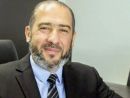
Kuwait Election: Islamists reign as women lose out Ali Al-Rashid MP called on the people to start a new chapter of forgiveness and to forget the past The turnout was about 60 per cent one hour before the close, already higher than the 58 per cent recorded in 2009 election. Female voters make up 54 percent of the electorate, and 23 women were among 286 candidates standing for the 50-seat legislative body. Early voter traffic at polling stations was low but picked up rapidly later, especially in tribal constituencies where men stood in long queues. 400,296 Kuwaitis were registered to vote in what was the first parliamentary election since May 2009. Tensions between Sunnis and Shiites – who make up 30 percent of Kuwaitis – have intensified in recent months, mainly over regional issues such as Bahrain, Iran and Syria. About 30 international and 300 local observers have been allowed to monitor the election for the first time. The snap poll is taking place after Emir Sheikh Sabah al-Ahmad al-Sabah dissolved parliament in OPEC’s third largest producer following unprecedented protests led by youths inspired by the Arab Spring. Kuwait had a population of 3.6 million as of mid-2011, but 68 percent of those are foreigners with Kuwaitis themselves numbering 1.17 million. While the region suffered under some disturbances (Arab Spring), the Kuwait continued to track on the road that brought it many years ago - and guaranteed reform, democracy and participation. Are rarely perfect the democratic process - Democracy is an evolving process such as development plan, financial responsibility and education. This is the gift of political participation and freedom of expression and the opportunity to raise your voice without the fear of the consequences.  Kuwait – The M. E. Times Intl’: The Kuwaiti opposition scored a resounding election victory unparalleled since 1992 by securing 34 of the 50-member National Assembly, one more than the required absolute majority to dictate terms. Sunni Islamists and the nationalist Popular Action Bloc emerged the main winners, with Salaf and the Islamic Constitutional Movement, or Muslim Brotherhood, each winning all the four seats they contested. The government and its supporters were hammered with Shiites winning seven seats down from nine, liberals reduced to just two from at least five in the previous National Assembly and pro-government around five MPs from as many as 15. No women were elected to the new house compared to four in the previous assembly when women made history by winning seats in the assembly. Analysts have attributed the women debacle to the female lawmakers’ blind support of the government. MP Obaid Al-Wasmi, a professor of law who won for the first time, told cheering supporters that he will open all corruption files and will push for the implementation of the law against all. “The Kuwait of tomorrow will not be the Kuwait of yesterday†said the outspoken opposition figure. Kuwait leaders congratulate winners of National Assembly’s elections H.H the Amir Sheikh Sabah Al-Ahmad Al-Jaber Al-Sabah sent congratulatory cables to winners of the National Assembly’s elections, hoping that they would do their best to serve the country and its people. H.H the Crown Prince Sheikh Nawaf Al-Ahmad Al-Jaber Al-Sabah and His Highness Prime Minister Sheikh Jaber Al-Mubarak Al-Hamad Al-Sabah sent similar cables. In another development, Deputy Prime Minister, Minister of Defense and Minister of Interior Sheikh Ahmad Al-Humoud Al-Jaber Al-Sabah said his government wouldn’t allow anybody to take law into their own hands. “As a state of law, Kuwait will spare no effort in maintain the rule of law, †Sheikh Ahmad said. The minister made the remarks during an inspection tour of a polling station.  He regretted the recent attempts by some people to act to the contrary, vowing to prevent the repetition of any incidents that could destabilize the security of the country. The media momentum and attention that accompanied the Kuwaiti elections, pointing out that it has won the respect and admiration of many in the region and credited Kuwaiti democracy as a leading force in the Arab world. Sheikh Jaber Al-Mubarak hopes to establish constructive relation with parliament His Highness the Prime Minister Sheikh Jaber Mubarak Al-Hamad Al-Sabah expressed hope that the government and upcoming parliament would be bound with "positive relationship." Sheikh Jaber Al-Mubarak, interviewed on the occasion of parliamentary elections, expressed hope that past files of disputes would be folded. "We look forward to extending a hand of cooperation, sincere intentions and mutual cooperation to make up for what has been missed for sake of future of Kuwait and its people so it may enjoy permanent spring," HH Sheikh Jaber Al-Mubarak said. HH the Prime Minister affirmed government keenness on abiding by the National Constitution, maintaining the state of law, justice and equality, transparent action, respecting rights and freedoms of citizens, human rights and combating corruption. Sheikh Jaber Al-Mubarak, who took over the premiership office at critical times when the government of his predecessor, Sheikh Nasser Al-Mohammad Al-Sabah, stepped down, was asked how he viewed future of the country while he was overseeing the electoral process. "I am optimistic that the coming phase will witness positive change in the relationship between the two authorities and this would serve Kuwait's interests," he said. Asked whether he was concerned at possible higher influence of the opposition in the parliament, HH the Prime Minister said the state and people of the country should respect results of the elections. His Highness the prime minister vowed anew that he would seek to bolster the relationship of cooperation between the two authorities for sake of strengthening democracy. In response to a question whether he would stand against what was dubbed as "the corrupt media," Sheikh Jaber Al-Mubarak said, "We are proud of the high ceiling of the freedom of expression which has been guaranteed by the Kuwaiti Constitution. "We have never pondered prospect of limiting freedoms of the freedom of expression ... responsibilities warrant that we set priorities and enhance the responsible freedom and take stringent legal action against who may try to threaten our national unity, strength of the internal front, the social fabric, maintain peoples' dignity and ban defamation and deterioration of the level of dialogue." "We will not allow factionalism or tribalism or sectarianism to affect our national unity and integration of our society, also we will not allow doubting faithfulness of any citizens of Kuwait and our criteria will be efficiency, devotion, perseverance and giving." Heavy burden lie ahead for new lawmakers -- Sheikh Hamad Information Minister Sheikh Hamad Jaber Al Ali-Al-Sabah expressed hope that the new parliament would undertake the task of accomplishing achievements and boosting development. Sheikh Hamad, speaking during a tour of information centers and the main information center, said, "We hope that members of the assembly would aim at realizing higher interests of the country and serving the people." He also expressed wish the legislators would work in harmony with the executive authority for service of "serious national action." "On this blessed day, we draw inspiration from glories of the ancestors who enacted the fourth Kuwaiti Constitution and established the National Assembly in 1962 so that Kuwait would be blessed with democracy and rank among advanced nations," the minister stated on the occasion of the polling day that crowned marathon campaigning by 286 candidates, vying for seats in the 50-member National Assembly (Parliament). Various tasks lie ahead for the upcoming lawmakers and executives, namely utility, health and housing projects, the minister stated. "Upcoming phase warrants that we all work hand in hand, placing interest of Kuwait above our heads, requirements of our people in our hearts, justice and equality among objectives of the state strategy and full-scale development plans for present and future Kuwait," Sheikh Hamad added. Minister Hamad praises international elections observers' presence Information Minister Sheikh Hamad Jaber Al-Ali Al-Sabah said that the presence of international observers in Kuwait gives a good impression of the democratic process in the State of Kuwait, saying that justice and transparency are among the country's work strategy. This came during a luncheon he hosted in honor of the international observers parliamentary elections in Kuwait. He stressed that the presence of international observers gave the best impression in the hearts of the citizens, local, Arab and international civil societies on justice and transparency as acquired rights for candidates and voters. Sheikh Hamad said that the eyes of the world were focused on the State of Kuwait, which was 'lived a democratic wedding' where about 120 media bodies and correspondents from around the world were covered these elections. The Minister valued the role played by the Ministry of Information to cover the election process since opening the door for registration. He said that the government is working according to a well prepared plan and comprehensive media strategy to cover the polling day and vote counting and announcing the results. Sheikh Hamad said that the ministry staff and media persons pay a tribute to H.H the Amir Sheikh Sabah Al-Ahmad Al-Sabah, H.H the Crown Prince Sheikh Nawaf Al-Ahmad Al-Sabah and H.H the Prime Minister Sheikh Jaber Al-Muabark Al-Hamad Al-Sabah for providing all facilities to local, Arab and international media means. Minister Safar Current parliament elections are a crucial event that coincide with the 50th anniversary of enacting Kuwait Constitution that stipulates basic laws and sets terms for the relationship between the ruler and the ruled, said the Minister of Public Works. Dr. Fadhil Safar, also the Minister of State for Municipal Affairs, described in a statement the National Constitution as "a crown" of the historic relationship between the ruling Al-Sabah family with the Kuwaiti people, distinguished with consultation, exchange of views, proposals, regular meetings and participation. It is one of the "best constitutions in the region, and perhaps, in the whole world." Ali Al-Rashid MP The newly-elected MP Ali Al-Rashid called on the people to start a new chapter of forgiveness and to forget the past. Speaking to Al Watan, he said that the future requires that all Kuwaitis to unite so that we bring back the country to its glorious days. Similarly, MP Khaled Shakheer Al-Mutairi stressed that he would do his best to implement certain changes and amendments in the Kuwaiti Constitution namely the issue related to specifying a time period for the office of premiership. As for the MP Shuaib Al-Muwaizari, he said that regardless of the issues, the best interest of the country should remain at the top of agenda stressing at the same time that national unity should not be compromised. MP Khaled Al-Tahous, on the other hand, said that he is personally optimistic and that he has high hopes to see the two authorities, the executive and the legislative, sitting down together and jointly making decisions for the interest of the country. Additionally, MPs Ahmad Al-Saadoun, Mohammad Al-Saqar and Ali Al-Rashid have officially announced their intention for running for parliament speaker post when the elections take place during the beginning of the next legislative term. Comments & Reactions Some voters expressed concern that the election, which comes after one of the most aggressive campaigns since Kuwait first introduced democracy in 1962, would not help in bringing back stability to the country. Modern communications tools play a significant role in the dissemination of political and media events, making it a necessary tool in the individual's daily life. A number of voters in the third constituency for the National Assembly 2012 elections said in various interviews that the increase of usage of such media tools has noticeably contributed to the dissemination and transmission of the electoral process in a transparent and impartial manner. . “The atmosphere is unhealthy and highly charged ... because sectarian and tribal tensions are negatively impacting our country. Kuwait is a small country and does not bear struggles,†former Oil Minister Adel al-Sabeeh said. “The opposition is likely to boost its strength but I think we are headed for more disputes,†Sabeeh told AFP. . “I have always regarded Kuwait as a ‘thought leader’ in the Gulf Cooperation Council (GCC) as Singapore is the thought leader of the ASEAN bloc. It’s a very modern and forward looking country,†Nalapat remarked. “I listened to five or six election rallies. It is quite interesting to note that the candidates are speaking without any fear. . The elections constitute one of the outcomes of the country's deep-rooted democratic experience, marked with a balanced relationship between a state led by an Amir and people that enjoy freedoms of speech and opinion, according to terms guaranteed by the National Constitution, said Tarafa Baghjati, board member of the European Network Against Racism (ENAR) in an interview. Moreover, Kuwait' adoption of the democratic system, since its independence in the 60s of the last century, has made it immune in the face of such revolts and turbulence. The democratic experience in Kuwait is an advanced example, among the other member states of the Gulf Cooperation Council, in particular, and the Arab world, in general, he affirmed. . Kuwait's democracy is seminal amongst its counterparts in the GCC, Lahbib Choubani, Minister in charge of Relations with Parliament and Civil Society, said. Choubani said that the Kuwaiti democratic experience has been shaped since the 1960s and it reached an exceptional level in recent years due to the support of the ruling Al-Sabah family. . The State of Kuwait is a pioneer and leading example of a democratic state in the Arab region with its freedom of opinion and freedom of expression that has enriched political life for decades, Lebanese media figures said. News anchor at Lebanese Broadcasting Corporation Yazbak Wahbe said, "Kuwait has a deep-rooted democracy which sometimes results in holding of parliament elections at short intervals, which is a true sign of democracy ... What is also unique in Kuwaiti political action is steering away from confrontation." Senior reporter of Lebanon-MTV Denise Rahme Fakhry on her part said "Parliamentary elections in Kuwait are a manifestation of democracy we wish to see in all other Arab countries." She added that whatever the result of the polls, they are a necessary means for people to express themselves. . Two Arab media celebrities, Dr. Hassan Makki and Adel Darwish, agreed that the mass media play a great role in the democratic transition and educating the people on the democratic practices and freedoms. Addressing a symposium, held by the information center of the 2012 National Assembly elections under the theme of "Media and Democracy" here, Dr. Mkki, professor of media at Kuwait University, said: "Media and democracy have complementary features, the common denominator of both is the concept of freedom." "Freedom is determined by the authorities which determines the margin of freedoms, thereby controlling the free movement of mass media in conveying the true picture of events. "The revolution of information and communication technology played a great role in the social networking and view sharing nowadays which, in turn, facilitated the flow of information especially those relating to democracy and civil freedoms," Dr. Makki noted. . On his part, Darwish, a writer and political analyst, said the press has to offer a quality content for the audience otherwise it could be cheating them. "The growing number of media outlets creates conditions conducive to competitiveness and improvement of the quality of the content," he said. . The State of Kuwait has historic experience in democracy and political openness which other countries lack, Lebanese experts said. Abdo Saad, head of Beirut Center for Research and Information, said "Kuwait has a rich history in democracy, it is one of the pioneering Arab countries, and since the creation of the state, with a real political action. "There is no ultimate ruler in Kuwait but rather a kind of partnership, and it is the only country in the Arab world if we excluded Lebanon," he said in an interview. Saad said Kuwait was "very advanced" in terms of democracy because there was a high degree of scrutiny by the parliament. . Executive Manager of the Arab Development NGOs Network, Zeyad Abdulsamad, said the political regime in Kuwait was quite opened. Democracy and elections in Kuwait will spare the country from political conflicts, he noted. . Abdulaziz Al-Mahdi, a private company employee, said that the Information Ministry has, for the first time, used the social networking tool Twitter to cover events of the 2012 National Assembly elections, in addition to its website, saying that such step comes within the framework of its keenness to ensure transparency and impartiality of the electoral process. . Ordinary voters expressed similar worries. “We are very frustrated and worried about what is happening in Kuwait,†said one woman, Umm Saud, after voting in Jabriya, 15 kilometers south of Kuwait City. “I am not optimistic this election will resolve our problems, but I pray that I am wrong,†she told AFP. . “I voted for liberalism and feminism,†Dalia Essa, 38, said after voting. “I want things to get done, I don’t want any more drama and debates. I want things that actually matter to happen, like education, health and development.†The Kuwaiti Ministry of Information attaches great  importance to the parliamentary elections Thanks to wise decisions taken by the Emir of Kuwait Sheikh Sabah Al-Ahmad Al-Jaber Al-Sabah to dissolve the Kuwaiti National Assembly and form a new government headed by Sheikh Jaber Al-Mubarak, Kuwait has turned its back on the previous internal crisis, and went on to look forward and engage in the new general elections atmosphere. In his speech during the first meeting of the Council of Ministers, Sheikh Jaber Al-Mubarak President of the Council, draw a calculated roadmap to achieve the goals set by the Amir, reflecting the aspirations and ambitions of the Kuwaiti people. Ensuring the integrity and transparency of elections and the State support with all its agencies at a same distance from everyone was ahead of this program. His Highness the Amir expressed a special attention to the young people considering them the hope of Kuwait in the present and future, noting that it was now time for our young sons and daughters to get the attention and care that they deserve, engage in taking responsibility and move on to a serious stage of positive action that touches their concerns, aspirations and ways of dealing with it in various fields of education, employment, rehabilitation, recreation, etc., and encourage creativity and participation in building their homeland. "Here I tell you my young children that our country counts on you a lot of hopes and aspiration. You had a role in the criticism of the negative conditions and imbalances in the country, which is undoubtedly a good and needed work", He said. The Prime Minister In light of the Amir Sheikh Sabah Al-Ahmad Al-Jaber Al-Sabah's directives, the Prime Minister, Sheikh Jaber Al-Mubarak gave a comprehensive statement at the first meeting of the Council of Ministers which has formed the a road map for government work. He began his speech by saying: I am pleased to express first my highest gratitude and pride in the precious confidence conferred by His Highness the Amir (May Allah guard and preserve him) to assume ministerial responsibilities at this stage of our beloved Kuwait's history, alluding by thanks and appreciation to the sincere efforts made by His Highness Sheikh Nasser Mohammed Al-Ahmad al-Sabah during his presidency of the Council of Ministers for his last mandate, and the remarkable achievements despite the surrounding difficulties, and his permanent keen to law enforcement, including his good dealings, qualities and generosity with his brethren and fellow ministers, wishing for his Highness good health and continuing service of the country and citizens. I would also like to extend my sincere thanks to the Ministers in the former cabinet for their good efforts in the performance of their duties and responsibilities during the last period. The Minister of Information In addition, the appointment of Sheikh Hamad Jaber Al-Ali, Minister of Information, reflected the importance attached by the government of Prime Minister Sheikh Jaber Al-Mubarak to this vital and influential sector in the lives of people for playing an honest and transparent role eager for the unity of the homeland and the people, to avoid inciting all that would affect the Kuwaiti society. It is well known about Sheikh Hamad Jaber Al-Ali, new Minister of Information, his deep and rich experience in public work, in addition to the broad culture and enlightenment, and exact knowledge of the general situation and the Arab Gulf. The Kuwaiti Ministry of Information, led by HE Minister Sheikh Hamad Jaber Al-Ali, and Sheikh Salman Hamoud Al-Sabah, the undersecretary, has attached great importance to the parliamentary elections 2012, by providing opportunities and media space for all candidates, disseminating their programs without discrimination or bias to one without the other, pointing out that justice is the ministry's approach. The Minister of Information stressed on the importance of media in the transfer and delivery of print and video information and data to the masses, and the media influence on the thinking and decision-making, therefore successful media companies seek the credibility, transparency and professionalism in the transfer and analysis of news in the correct form. Sheikh Hamad Jaber Al-Ali Al-Sabah, attached great importance to the local and foreign media in order to perform their role and function in the coverage of the Kuwaiti National Assembly elections events which took place on the second of February, without any constraints. The ministry provided all the ways to realize the desired success, through the establishment of a media center to facilitate the work of various media in performing their function, and transferring the experience of democracy in Kuwait and the Kuwaiti people's participation in the celebrations of national elections in 2012. More than 1,150 reporters and delegates have been training and deployed in the five various constituencies to cover the elections, according to modern techniques provided by the media center for the transfer of current and latest news to the media monitoring centers and stations, to ensure their access to media channels with all the speed and safety. The media center established to cover the elections in the "Sheraton" has turned into a cell full of life, movement and activity. This reflects the keenness of the Minister of Information Sheikh Hamad Jaber Al-Ali and Sheikh Salman al-Hamoud, the undersecretary, to be present on a daily basis to check on the mechanisms of action and overcome the difficulties facing the visiting journalists in order to cover this electoral event. The Undersecretary of Information Sheikh Salman confirmed in a news conference organized by the Ministry of Information at the Media Center for the National Assembly Elections 2012, that government is working to ensure fair elections through the decisions of the establishment of the Independent Electoral Commission and the Independent National Commission to oversee the candidates headquarters and integrity commission which has helped to upgrade this democratic event. He explained that under the directives of the Minister of Information Sheikh Hamad Jaber Al-Ali Al-Sabah, a comprehensive plan has been prepared with the participation of officials from all the concerned ministries and institutions, which included the launch of programs and flash campaign for voters awareness in terms of the importance of participating in elections and a making the good choice to determine the future of Kuwait. Mohammad Alawash, the Undersecretary of the Ministry of Information Assistant for the radio Affairs and president of the Media Center to cover the National Assembly elections, announced that the Ministry has trained more than 1,150 reporters and delegates from the Ministry's staff and outside to cover the elections in the five constituencies, adding that they was deployed to 564 sub and original committee in every districts to cover the Democratic event. Alawash said that the ministry has called more than 120 Arab and foreign journalists representing different media views to cover the elections and to participate in activities hosted by the Media Center. Adding that the ministry has hosted and continues to host, many journalists in various activities organized on the sidelines of the center. This year, the Kuwaiti parliamentary elections enjoyed fair, impartial and professional media coverage, to reflect the Amir supreme speech to improve citizens' choice to their representatives in parliament. |