|
|
|
| “Without the army, everything collapses… and it is time for Lebanon and our region to enjoy stability and security.” |
**
Trump and Aoun Open a Historic Window for Lebanon: US Support for the Army and a New Path Towards Peace and Sovereignty
|
“Without the army, everything collapses… and it is time for Lebanon and our region to enjoy stability and security.”
23/07/2026
(See translation in Arabic section)
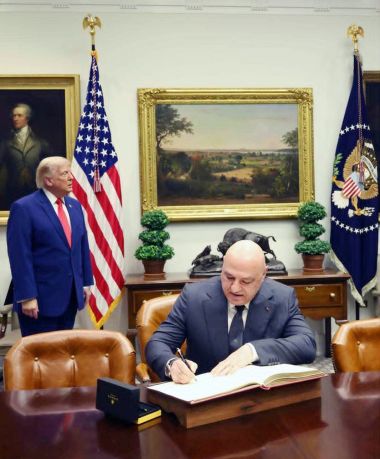
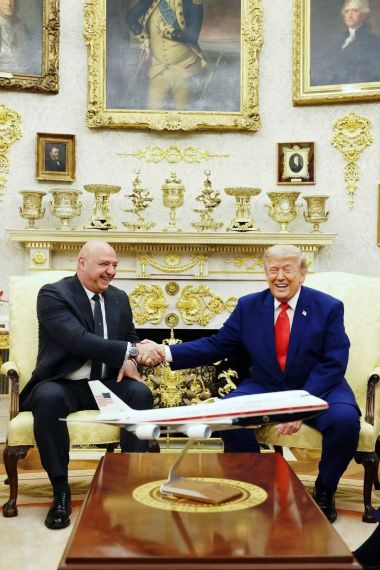
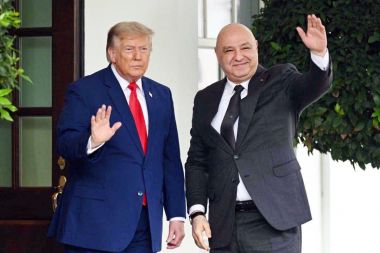
Sydney-Middle East Times Int'l: The visit of Lebanese President General Joseph Aoun to the White House and his meeting with US President Donald Trump constituted a highly significant political and diplomatic milestone, not only in the course of Lebanese-American relations, but also in the future of Lebanon’s security and sovereignty and its position amidst the rapid transformations taking place in the Middle East.
The meeting, with its direct messages regarding support for Lebanon, strengthening the capabilities of the Lebanese army, and ending the state of hostility with Israel, transcended mere protocol to reflect a serious attempt to open a new path based on strengthening the Lebanese state, restoring its authority over all its territory, and moving from managing recurring crises and wars to seeking a long-term settlement.
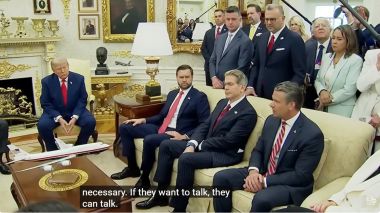
During the press conference that followed the talks, it became clear that Washington views Lebanon as an essential part of any future formula for regional stability. It also became clear that President Aoun arrived in the American capital with clear priorities: to solidify political support for Lebanon, ensure the continuation of military aid to the army, and work towards implementing an agreement that would end Israeli aggression and occupation in the south, paving the way for the state's return to all its territory.
** Trump: Lebanon has suffered for too long and deserves help.
President Trump opened his remarks with warm and noteworthy words about Lebanon and its people, considering that this country has been mistreated for decades, despite the exceptional scientific, intellectual, and professional capabilities of its citizens.
Trump spoke of the Lebanese as professors, doctors, lawyers, intellectuals, and highly successful individuals, emphasizing that a people with such vitality and resilience deserves a better future than the wars and collapses they have endured.
The American president recalled what he had heard from Lebanese friends who refuse to leave their country despite the dangers, bombings, and instability, saying that they hear the sound of bombs, but they cling to Lebanon because they love it and do not want to live anywhere else. This praise was not merely diplomatic courtesy; it appeared to be a prelude to a more explicit political commitment when he said that the United States would help Lebanon, and would help it significantly.
Trump reiterated that Lebanon had suffered injustice for too long, and that his administration wanted it to receive the respect and support it deserved. He indicated that some problems were beginning to be resolved through cooperation between Washington and Beirut, expressing his belief that further achievements could be made in the coming period.
Through these remarks, it became clear that the White House did not want to deal with Lebanon simply as a country in crisis and in need of aid, but as a strategic partner whose stability could positively impact the entire region.
** Aoun: A Historic Opportunity to End Hostilities
For his part, President Joseph Aoun thanked his American counterpart for the invitation and what he described as the close cooperation between the two governments, emphasizing that recent diplomatic efforts had yielded an important framework agreement aimed at ultimately ending the state of hostility between Lebanon and Israel.
Aoun considered achieving this goal to be one of the most prominent achievements of his term, and one that could also become a key milestone in President Trump's foreign policy legacy. Aoun stated that the time has come for Lebanon and the region to enjoy stability and security, emphasizing that his vision aligns with that of the US president regarding building a regional peace based on stability and coexistence.
Trump expressed his direct support for this proposal, affirming that Lebanon has a patriotic and highly motivated people, and that the United States will work to ensure the success of this new path.
The significance of this understanding lies in the fact that it is not limited to a temporary ceasefire or addressing isolated security incidents, but rather aims to end decades of confrontation between Lebanon and Israel.
The repeated references to a new framework agreement suggest that both governments believe there is a real opportunity to move from fragile truces to a more lasting settlement, provided that the commitments are translated into practical steps and that Lebanon's sovereignty, rights, and territorial integrity are respected.
The Israeli withdrawal and the return of the state to the south remained at the heart of the questions raised during the conference. When asked about the timeline for a full withdrawal, Trump did not specify a deadline, but indicated that the redeployment process had begun under the recent agreement. He described the agreement as important and expressed confidence in its continued implementation.
President Aoun, for his part, avoided setting a fixed deadline, preferring to focus on the precise and responsible implementation of the agreement to prevent renewed tensions and restore stability.
For Lebanon, the Israeli withdrawal is not only a political demand but also a prerequisite for the state's return to the south, the deployment of the army along the entire border, enabling residents and displaced persons to return safely to their towns and villages, and the reconstruction of what was destroyed by military operations.
However, the conference did not ignore Lebanese concerns about continued Israeli violations. Trump was asked about reports of Israeli gunfire near positions where the Lebanese army was attempting to deploy in one of the newly established areas.
The US president acknowledged that he had heard about the incident shortly before the conference and said his administration would look into it. Although he did not directly criticize Israel, his announcement that he would follow up on the matter signaled that Washington understands the seriousness of any breach that could undermine confidence in the agreement, weaken the army and the state, and return the region to a cycle of escalation.
** The Lebanese Army: A Central Focus of the New Vision
The Lebanese army emerged as the most important pillar in the vision presented during the meeting. Trump affirmed that Washington is preparing concrete plans to support the Lebanese Armed Forces, and that this issue was a key topic in his closed-door meeting with President Aoun.
He explained that the United States is working with international partners to enhance the army's capabilities, strengthen its potential, and help it gradually reach a higher level of self-sufficiency and effectiveness, enabling it to carry out its security and defense missions throughout Lebanon.
Aoun, for his part, made a direct and clear appeal to the United States, requesting continued support for two types of assistance: political support for Lebanon and military support for the army.
He described the military institution as the most trusted in the country, noting that its strength lies not only in its weapons, equipment, and training, but also in the trust it enjoys from Lebanese citizens of all regions and sects.
His statement, "Without the army, everything collapses," encapsulated the essence of his vision for the country's future.
Aoun recalled the experience of 1975, when the army's disintegration at the beginning of the civil war led to a power vacuum, the proliferation of militias, multiple centers of power, and Lebanon's descent into a protracted war.
He warned against repeating this experience, emphasizing that the army must remain the cornerstone of national unity, the guarantor of internal security, and the legitimate arm of the state. Aoun also expressed his confidence in the army's leadership and performance in implementing the framework agreement, stressing that the state, not armed groups outside its control, must hold security and sovereign authority over all Lebanese territory.
Therefore, supporting the army is not merely technical or military assistance, but a direct investment in rebuilding the state, protecting civil peace, and preventing Lebanon from sliding back into chaos.
** Hezbollah and the Internal Security Challenge
Despite the positive tone that prevailed at the conference, Trump acknowledged that Hezbollah remains the biggest security problem in Lebanon.
He stated clearly that there is a problem with the party, hinting that previous American steps have weakened its position and that future developments could attract international attention and change the security situation in the country.
Trump did not reveal any new measures, but he suggested that Washington would continue to support efforts aimed at strengthening state authority and reducing the influence of armed groups operating outside its institutions.
This issue presents Lebanon with a delicate equation: how can sovereignty be rebuilt and weapons be exclusively held by the state without sliding into an internal conflict that threatens civil peace? For this reason, Aoun's focus on the army and constitutional institutions appeared to reflect a gradual approach aimed at strengthening the state rather than engaging in open confrontation.
The Lebanese president repeatedly brought the discussion back to the necessity of strengthening legitimate institutions, indicating that addressing the issue of weapons must be done through the state, national dialogue, and the consolidation of stability, not by igniting a new internal conflict.
Aoun defends Berri and his national role.
One of the most sensitive moments of the conference was the question concerning Speaker of Parliament Nabih Berri's position on the framework agreement.
Reports circulated about his objection to the agreement and his warnings of internal unrest. However, Aoun rejected this interpretation, explaining that the agreement falls within the constitutional powers of the president and does not require parliamentary ratification.
At the same time, Aoun strongly defended Berri, emphasizing that he wants to end the conflict because he is a son of the South and has lived through the suffering and repeated destruction of his region.
He described Berri as a statesman who understands his national responsibilities and pointed to the sensitivity of his position as the leader of a key Lebanese community, and the delicate political and popular considerations that this position entails. Trump welcomed this clarification, expressing his belief that Berri would join the process once he saw tangible progress.
This exchange revealed an American understanding that any lasting settlement in Lebanon cannot succeed through military arrangements alone, but also requires internal political consensus that takes into account Lebanon's complex balances and prevents any group from feeling targeted or excluded.
The Abraham Accords and Lebanon's Position
Within the broader regional context, Trump reaffirmed his commitment to the Abraham Accords, considering them one of his administration's most important diplomatic achievements.
He stated that participating countries had reaped significant political and economic benefits, and that none had wavered in their commitment despite the conflicts in the region, predicting that other countries would join in the near future.
Although he did not announce any formal negotiations for Lebanon's accession, he emphasized that Lebanon occupies an important place in the American vision for regional peace.
However, any Lebanese transition to a new phase of regional relations remains contingent, first and foremost, on ending the Israeli occupation and aggression, guaranteeing sovereignty, restoring the state's decision-making power, and reaching a formula acceptable to the Lebanese people that respects their country's unique circumstances and delicate balances. Iran at the Heart of the Regional Confrontation.
The conference expanded to include Iran, which Trump described as the most significant security challenge for the United States and its allies.
He stated that the Iranian leadership had suffered major strategic setbacks and that Tehran was eager to return to negotiations. However, he emphasized that Washington would not negotiate for the sake of dialogue, but only if Iran demonstrated a genuine willingness to abandon policies that threaten regional stability.
Trump reiterated that Iran must not possess a nuclear weapon and defended previous US military operations against its nuclear facilities, arguing that they had delayed its program for many years and prevented a dangerous shift in the balance of power in the Middle East.
He also warned that any Iranian attempt to rebuild its nuclear infrastructure would be met with renewed US action, affirming that the policy of military and economic pressure would continue as long as Tehran maintained its current stance.
This escalation directly impacts Lebanon, as the future of Hezbollah and the internal Lebanese balance of power are closely tied to the trajectory of the US-Iranian confrontation. Therefore, Washington does not view Lebanon as a separate issue, but rather as part of a broader effort to reshape the regional balance of power, reduce Tehran's influence, and strengthen national states and institutions in the face of its affiliated armed groups.
Syria and the Prospects for a New Role
Trump addressed the situation in Syria, not ruling out the possibility that its current leadership could play a role in curbing Hezbollah's influence and contributing to new regional security arrangements.
He praised what he described as the Syrian leadership's efforts to restore order after years of conflict, and said his relationship with the Syrian president was very good.
Although he emphasized that these ideas remain theoretical and not yet fully formed official policy, the mere fact that they were raised reflects the magnitude of the transformations the region has witnessed.
Washington appears interested in involving neighboring countries in a broader formula for stabilizing Lebanon, a formula that would have been difficult to imagine just a few years ago, when regional alliances were moving in a completely different direction.
From Crisis Management to State-Building: The meeting did not produce dramatic announcements or decisive deadlines, but it did restore Lebanon to a prominent position in American calculations.
Talk of ending the state of hostility with Israel, supporting the army, implementing the withdrawal, strengthening sovereignty, and expanding regional diplomacy indicates a rare opportunity, albeit one fraught with significant internal and external obstacles. For President Aoun, the visit provided international political cover for his project of rebuilding the state, protecting the army, consolidating the authority of constitutional institutions, and preventing Lebanon's return to an era of militias and divisions.
As for Trump, he saw the meeting as an opportunity to present himself as a broker of major settlements in the Middle East, while simultaneously maintaining a hardline policy toward Iran and armed groups.
The success of this new vision remains contingent on concrete actions: Israel's commitment to withdrawal and a cessation of military operations, continued US support for the army, the Lebanese state's ability to extend its authority, the existence of internal consensus that protects the country from fragmentation, and the success of diplomatic efforts to shield Lebanon from the repercussions of regional conflict.
Nevertheless, the tone of the meeting differed markedly from that of previous years. Instead of focusing solely on managing the collapse or containing the escalation, the two presidents spoke of reconstruction, stability, and lasting peace. If the pledges made in Washington are translated into practical and tangible steps, history may record this meeting not as a passing diplomatic visit, but as the beginning of a new chapter in Lebanese-American relations, and a pivotal moment in Lebanon’s long journey towards restoring its sovereignty, consolidating its state, and achieving peace, stability, and national recovery.
|
|
|
|
|
|






.jpg)




.jpg)