|
|
|
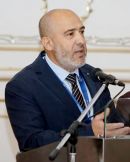
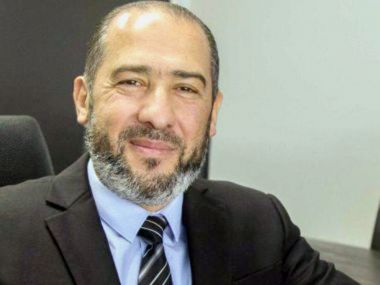
| Dr. Jneid said, "This response is a constructive start, but it is not a comprehensive answer to the Special Envoy's report." |
** The response did not include any details on the funding levels for most of the newly announced measures to combat Islamophobia.
|
Government Response on Islamophobia Welcomed, but Scale of New Action Falls Short and Further Structural Reform Needed
19 July 2026
(See translation in Arabic section)
Sydney-Middle East Times Int'l: The Australian Federation of Islamic Councils (AFIC) welcomes the Australian Government’s formal response to the recommendations of the Special Envoy to Combat Islamophobia and its clear recognition that Islamophobia and Anti-Muslim Hate is a serious national problem requiring government and institutional action.
The response acknowledges the harm Islamophobia causes to the safety, dignity, mental health, employment and participation of Australian Muslims, including the disproportionate impact experienced by visibly Muslim women. It also recognises that responsibility for addressing Islamophobia cannot be placed upon Muslim communities alone.
AFIC welcomes the practical initiatives announced by the government, including the establishment of an Islamophobia Education Taskforce, targeted wellbeing and resilience support, new opportunities for Muslim community organisations, support for Muslim women and young people, improved research and data collection, and measures intended to strengthen awareness across education, government and parliamentary workplaces.
AFIC President Dr Rateb Jneid said the response represented an important acknowledgement of experiences Muslim Australians have raised over many years.
“The government’s unequivocal recognition of Islamophobia is important. Australian Muslims have lived with its consequences across schools, universities, public institutions and their everyday lives, often without their experiences being adequately recognised or addressed.”
“The initiatives have the potential to deliver meaningful benefits. They must now be properly designed, adequately funded and implemented in genuine partnership with the communities they are intended to serve.”
AFIC is concerned, however, that the government has not provided a public recommendation-by-recommendation response setting out the status of all 54 recommendations made by the Special Envoy.
The document brings together a limited number of new commitments, expansions of existing programs, initiatives announced before the government’s response, and ongoing work already being undertaken by government agencies and the Special Envoy’s office. Presenting these measures together makes the overall package appear more substantial than it may, in fact, be.
The response also provides no funding amount for most of the newly announced Islamophobia-specific measures. Apart from a limited number of identified allocations, it does not clearly set out the scale of new expenditure, whether funding has been secured within agency budgets, or how much of the package represents additional investment rather than existing expenditure being presented as part of the response.
Dr Jneid said greater transparency was essential.
“The community is entitled to know what is genuinely new, what was already underway and what additional resources the government has committed as a direct result of the Special Envoy’s report.”
“Recognition and announcements are important, but the real test is whether they are supported by new investment, clear deadlines, responsible agencies and measurable outcomes.”
AFIC calls on the government to publish a comprehensive implementation framework identifying which recommendations have been accepted, partially accepted, deferred or rejected. It must also specify the responsible minister and agency, funding allocation, implementation timetable, milestones and process for public progress reporting.
The response also gives insufficient attention to structural racism and institutional Islamophobia. Its strongest commitments focus on education, community wellbeing, positive representation, reporting and social cohesion. These measures are valuable, but they do not, by themselves, address the laws, policies, systems and institutional practices that may contribute to unequal treatment, exclusion and mistrust experienced by Muslim Australians.
“Islamophobia cannot be understood solely as a matter of individual prejudice, misinformation or social tension,” Dr Jneid said.
“It is also embedded in institutional practices, public policy, political rhetoric and systems that produce unequal outcomes. Supporting Muslim communities to respond to the consequences of Islamophobia must be matched by a willingness to examine and reform the structures capable of contributing to it.”
AFIC calls for further government action on legal protections against religious and racial discrimination, workplace discrimination, political and media accountability, policing and hate-crime responses, and the effects of national-security and counter-terrorism frameworks on Muslim communities.
The government must also directly address the intersection between Islamophobia, anti-Palestinian racism and anti-Arab racism. In the present environment, many Palestinian, Arab and Muslim Australians have experienced hostility, exclusion or intimidation because of their identity or their advocacy for Palestinian human rights. A comprehensive national response must address these intersecting forms of discrimination, particularly within educational, workplace, media and public institutions.
AFIC will continue engaging with the government, the Special Envoy and Muslim communities to support measures that deliver genuine benefit and to press for the structural reforms that remain outstanding.
“This response is a constructive beginning, but it is not yet a comprehensive answer to the Special Envoy’s report,” Dr Jneid said.
“The measure of success will not be the number of existing programs assembled under the banner of the response. It will be the extent of new action and investment, and whether Muslim Australians experience genuine improvements in equality, safety, dignity and trust in the institutions that serve them.”
________________________________________
AFIC, established in 1964, stands as the Peak Muslim Organisation in Australia, with 170 members including 9 State and Territory Councils. It has a rich history of pioneering numerous community services and actively advocating for the rights and representation of the Muslim community.
Authorised:
Dr Rateb Jneid, President |
|
|
|
|
|



.jpg)