|
|
|
| Trump’s NATO Drama Masks a Gulf Crisis Spiralling Beyond Control |
** “The louder the political theatre became in Ankara, the clearer the
message from the Gulf: diplomacy is retreating while the risks of a
wider war are rapidly advancing.”
|
Trump’s NATO Drama Masks a Gulf Crisis Spiralling Beyond Control
12 July 2026
(See translation in Arabic section)
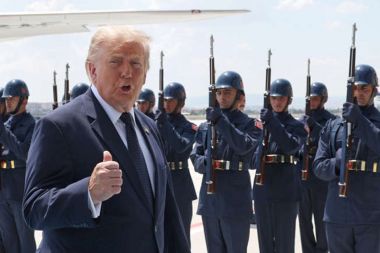
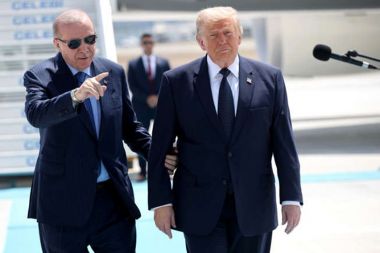
Sydney-Middle East Times Int'l: Donald Trump arrived at the NATO summit in Ankara determined to dominate the proceedings. Yet behind the confrontational language, personal disputes and theatrical announcements stood a far more consequential reality: the collapse of the Iran ceasefire, renewed attacks in the Gulf and an increasingly dangerous struggle over the Strait of Hormuz.
Donald Trump’s appearance at the July 2026 NATO summit in Ankara resembled a dramatic television production more than a conventional gathering of allied leaders. From his criticism of NATO members to his declarations about Iran, Greenland, Turkey and European trade, the US president ensured that almost every discussion revolved around him.
But beneath the spectacle was a genuine international emergency.
Trump’s most significant announcement was his declaration that the ceasefire with Iran was effectively over following a renewed exchange of attacks in and around the Strait of Hormuz. His uncompromising language suggested that the fragile understanding reached between Washington and Tehran had collapsed, even as American and Iranian representatives continued to leave the door partially open to negotiations.
This contradiction has become a defining feature of the crisis. Trump declared that he no longer wanted to deal with Iran, while also acknowledging that US negotiators remained engaged. Washington presented its position as an attempt to preserve freedom of navigation and prevent attacks on civilian shipping. Tehran, meanwhile, accused vessels of violating routes imposed by Iranian authorities and maintained that American interference was responsible for destabilising the waterway.
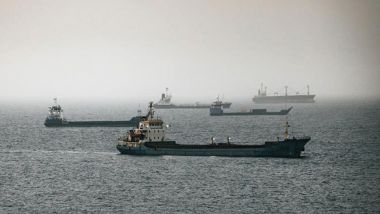
The Strait of Hormuz is not merely another battlefield. It is one of the world’s most important maritime and energy corridors. Any sustained disruption could affect oil supplies, insurance costs, shipping routes and global markets. The danger therefore extends far beyond Iran, the United States and Israel.
The latest escalation followed an attack on a Cyprus-flagged container vessel near Oman. Its crew reportedly evacuated into a lifeboat, while one Indian national was listed as missing. Iran’s Revolutionary Guard said the vessel had ignored warnings and travelled through an unauthorised route. Washington responded with another round of strikes against Iranian targets, describing the operation as an attempt to reduce Tehran’s ability to threaten commercial ships.
The United States Central Command said the strikes were ordered by the president after Iran failed to respect the memorandum of understanding governing maritime activity. US Defence Secretary Pete Hegseth summarised Washington’s retaliatory position bluntly: “Iran made a poor choice. Now they pay.”
** Iran then announced that the Strait of Hormuz was closed until further notice and warned that further retaliation would receive a severe response. Trump disputed the claim that Tehran had successfully closed the waterway, insisting that American military action had kept it open.
Such competing declarations reveal the growing absence of a mutually recognised framework. Washington demands unrestricted passage, with no tolls or Iranian controls. Tehran appears determined to assert its authority over shipping routes near its coast and to use maritime pressure as leverage against American military operations.
The conflict has also begun to spread geographically. Iranian missiles and drones were reportedly directed not only towards Bahrain and Jordan but also towards the United Arab Emirates, Qatar and Oman. These countries had previously sought to limit their exposure to the confrontation, with Qatar and Oman playing important mediation roles.
Attacks on Gulf states could prove strategically disastrous for Iran. Qatar and Oman are among the few governments capable of maintaining communication with both Tehran and Washington. Undermining their security risks weakening the diplomatic channels that may ultimately be required to stop the war.
The escalation also transformed the NATO summit from a discussion about transatlantic security into a public examination of the alliance’s divisions over Iran. Trump criticised NATO members for refusing to join the United States and Israel militarily, accusing them of failing to confront what Washington regards as the world’s leading state sponsor of terrorism.
Spain received particularly harsh treatment. Trump described it as an unreliable NATO partner and threatened to terminate trade and even discourage visits. These comments blurred the line between collective defence obligations and bilateral economic punishment.
ا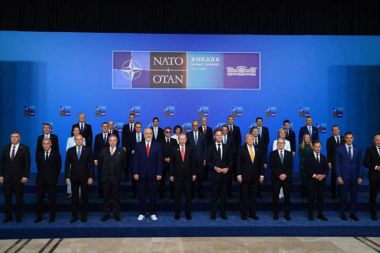 ** ** NATO was established to protect its members from external attack. It was not designed to require automatic participation in every military operation initiated by one ally outside the alliance’s traditional geographical responsibilities. European governments therefore face a difficult choice: supporting the United States politically without being drawn into a war they did not authorise and cannot easily control. Trump’s remarks may also deepen concern among allies that disagreements over military strategy could be answered with tariffs, diplomatic hostility or threats to wider relations. Rather than strengthening NATO unity, the Ankara summit exposed the gap between Washington’s expectations and Europe’s willingness to follow American policy in the Middle East.
The president further unsettled allies by reopening the question of Greenland. His claim that the Danish autonomous territory was more important to the United States than to Denmark prompted Prime Minister Mette Frederiksen to reiterate that Denmark would defend every part of its territory and that Greenland was not for sale. Although Greenland is strategically important because of its Arctic location, natural resources and proximity to emerging northern shipping routes, Trump’s approach risks turning a legitimate security discussion into a sovereignty dispute between NATO allies.
Another sensitive issue was the possible sale of F-35 fighter aircraft to Turkey. Trump said the proposal remained under consideration, despite longstanding strategic and security concerns. Such a decision would have consequences not only for NATO but also for Israel, which regards its qualitative military superiority as central to its regional security.
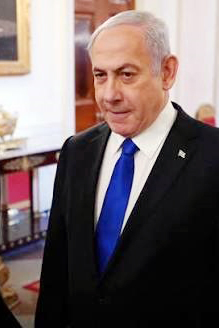
** Israeli Prime Minister Benjamin Netanyahu has warned that providing Turkey with advanced stealth aircraft could alter the Middle East’s military balance. Trump’s willingness to entertain the proposal demonstrates the complicated relationship between Washington, Ankara and Jerusalem. Turkey is a crucial NATO member, but its independent regional ambitions increasingly conflict with Israeli interests. Personal tensions also became part of the summit narrative. Italian Prime Minister Giorgia Meloni appeared to distance herself from Trump after refusing to support US strikes on Iran. Their disagreement demonstrated that ideological similarities between leaders do not necessarily translate into agreement on war. In contrast, Trump greeted Ukrainian President Volodymyr Zelensky warmly and indicated that Kyiv could be licensed to manufacture Patriot missiles. The apparent improvement in their relationship suggested that Trump may still be willing to strengthen Ukrainian defensive capabilities, despite previous confrontations and uncertainty surrounding future American support.
These developments reveal an administration attempting to manage several interconnected crises simultaneously: war with Iran, maritime security in the Gulf, NATO burden-sharing, relations with Turkey, Israel’s military concerns, the defence of Ukraine and emerging competition in the Arctic.
Yet the central question remains whether Washington still has a coherent diplomatic strategy towards Tehran.
The memorandum of understanding between the two sides is being interpreted in fundamentally different ways. Trump claims Iran accepted extensive restrictions before violating the agreement through renewed attacks. Iranian officials argue that the era of one-sided arrangements has ended and accuse Washington of failing to honour its commitments.
Almost halfway into what was described as a 60-day negotiation period, there appears to have been little substantive progress. Military action is increasingly replacing negotiation, while each side portrays retaliation as both necessary and defensive.
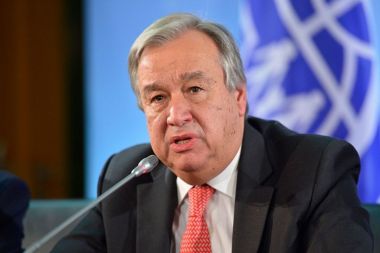
** United Nations Secretary-General António Guterres has called for an immediate end to the attacks, warning of their implications for international peace, regional security and the global economy. His appeal for Washington and Tehran to resume negotiations reflects the narrowing space available for diplomacy.
A strike on a tanker can trigger attacks on military installations. An American bombing campaign can provoke Iranian retaliation against Gulf states. An attack on a mediator can close diplomatic channels. A disruption in the Strait of Hormuz can then transform a regional confrontation into a global economic crisis.
Trump succeeded in dominating the NATO summit, but political dominance is not the same as strategic control. His rhetoric may project strength, yet the expanding conflict indicates that events are becoming increasingly difficult to manage.
At best, diplomacy has returned to its starting point. At worst, the collapse of the ceasefire, the widening attacks and the struggle over the Strait of Hormuz could mark the beginning of another prolonged and destructive phase of war.
The Ankara summit will therefore be remembered not simply for Trump’s dramatic performance, but for the moment when NATO leaders gathered under the shadow of a Gulf conflict threatening to escape every remaining restraint.
|
|
|
|
|
|