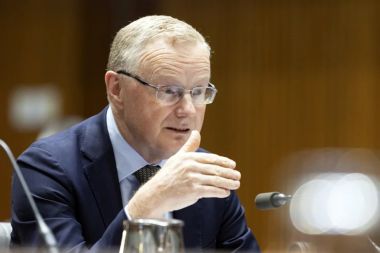
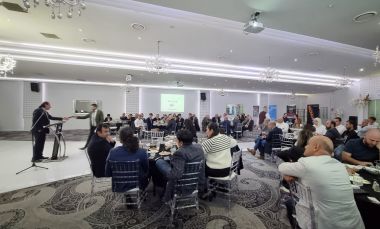
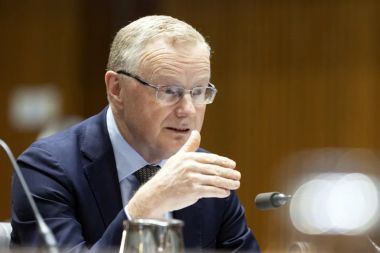
Australia has up to an 80 per cent risk of going into recession: RBA 12/05/2023 (See translation in Arabic section) Sydney - Middle East Times Int’l: Previously unpublished internal research from the Reserve Bank estimates that Australia’s risk of recession over this year and next could be as high as 80 per cent. The research, released as a result of a freedom of information request, includes modelling from a senior analyst in the RBA’s Economic Analysis Department. The economic modelling, conducted in September 2022 and based on the bank’s economic forecasts from August 2022, considered the risk of recession as the RBA raised interest rates at the fastest pace in recent history. Using the Sahm Rule, which defines a recession as when the quarterly average of the unemployment rate rises by at least 0.75 per cent above its minimum over the previous 12 months, the senior analyst said some models put the risk of recession at 65 per cent or more over the next two years. “Estimates suggest the probability of a recession over the next two years could be as high as 80 per cent,” the note stated. “If a recession does occur, it is most likely sometime over the next four quarters. This is in line with intensifying market commentary predicting a recession in the first half of 2023.” Using a different type of model reduced the recession risk, but still found the odds of Australia remaining on the “narrow path” talked about by RBA governor Philip Lowe of getting inflation back below 3 per cent without a major economic contraction at little better than 50-50. “The likelihood of ending up on the ‘narrow path’ is around one in two,” the senior analyst noted. “Allowing policy to respond increases this probability modestly, both because policymakers can tighten more aggressively to combat inflation and because they can cut rates to avoid a recession, when required.” This research also offers some insight as to why the Reserve Bank may have eased off on its monetary policy tightening, from 0.5 percentage point increases from June to September to a 0.25 of a percentage point rise in October. At the same time, the RBA has been willing to tolerate inflation sitting just above its 2-3 per cent target even by the end of its two-year forecast horizon. “Around 70 per cent of all simulations where inflation returns to just above the target band by the end of the horizon do not involve a recession,” the modelling predicted. Treasurer Jim Chalmers hoses down Peter Dutton’s concerns about migration and housing Jim Chalmers has accused Peter Dutton of playing divisive politics after the Opposition Leader aired concerns about the effect Australia’s short-term migration intake could have on the housing crisis. Speaking to reporters in Brisbane on Friday, the Treasurer hosed down Mr Dutton’s criticism by saying the migration forecasts included in the Albanese government’s second budget weren’t a government target or deliberate policy. Treasury is forecasting 400,000 people will have migrated to Australia by the end of this financial year and another 315,000 people will have moved here by the end of 2024 — higher than usual numbers following the reopening of Australia’s international border. Mr Dutton seized on the forecasts to attack the government in question time in parliament this week. He also made the numbers a feature of his budget reply address on Thursday night. “Amid a housing and rental crisis, our migration numbers will increase massively by 1.5 million people over five years – the highest number in our country’s history and more than the population of Adelaide,” he said in his speech to parliament. “Without addressing housing supply and infrastructure, where will these people live?” He claimed the government’s “Big Australia approach” would make inflation worse amid a housing and rental crisis. Dr Chalmers responded by calling Mr Dutton’s position “inconsistent”, noting the Coalition had previously thrown its support behind getting students and tourists back to Australia more quickly following the resumption of international travel after the Covid-19 restrictions were lifted. “Once again, Peter Dutton is playing the usual divisive and dishonest politics when it comes to population,” he said. “It’s not a government policy, it’s not a government target, and it is less cumulatively than what it would have been if their own forecasts a couple of years ago in their budget had eventuated.” Budget papers note higher forecast for net overseas migration in the near future is largely driven by fewer temporary migrants departing Australia than usual, rather than a greater number of people arriving. Labor is proceeding with plans to increase the cap on the number of visas Australia gives to skilled migrants each year to 195,000, in an effort to solve dire workforce shortages affecting many industries. The Greens have said Labor needs to come back to the table and negotiate a better deal for renters and make some guarantees about how much money would be spent from the HAFF and how many homes it would deliver. The issue of housing supply for skilled workers was noted in multiple submissions to a new parliamentary inquiry, commissioned by Home Affairs Minister Clare O’Neil, which is examining the role of permanent migration in “nation building”. In its submission, the Housing Industry Association said Australia should have an immigration policy that made it competitive in attracting skilled workers and noted the country’s reputation for having very high housing costs acted as a significant detractor for prospective migrants. In its submission, the Business Council of Australia said it believed migration was “fundamentally a positive” for Australia and suggested the permanent migration cap should increase to 220,000 in 2023-2024 to enable a “short-term catch up” following the border closure. The BCA called on the federal government to complement increasing the migration cap by supporting “effective forward planning” of infrastructure and housing by putting pressure on the states to improve their own planning systems and encouraging regional migration. The council also suggested the skilled worker migration system could be split to separately cater for highly skilled workers and those arriving on shorter-term visas to fill labour shortages. Migration is forecast to largely return to normal patterns from the 2024-2025 financial year and net overseas migration is forecast to continue at 260,000 in the 2025–2026 and 2026–2027 financial years. Labor is planning to deliver its strategy to overhaul the federal migration system later this year after a recent review, saying it will ensure the migration system “delivers the skilled migrants needed to address persistent skill shortages.” About 70 per cent of places in the 2023–2024 permanent migration program will be allocated to the skill stream, and the government will improve pathways to permanency for temporary skilled migrants. Greens, Coalition put $10 billion Housing Australia Future Fund on hold The Greens and Coalition have joined forces in a move to kick Labor’s $10 billion housing policy into the long grass. It leaves the federal government’s plans for a Housing Australia Future Fund at a major roadblock and stuck in the parliament for at least another month. The government had sought to pass legislation establishing the fund but is facing entrenched opposition from the Coalition and Greens. For two days, Labor unsuccessfully tried to limit the debate and bring it to a final vote despite the near certainty the bill would fail. The Greens and Coalition teamed up to prevent the government from doing so. The Coalition and Greens ensured the bill won’t be considered again until mid-June, at the earliest. The Coalition argues the fund will worsen inflation while the Greens are calling for changes, including much greater spending on housing and more support for renters. The Housing Australia Future Fund would invest $10 billion and use the returns on that investment to build social and affordable housing. The total amount that can be spent will be capped at $500 million a year, though that will be indexed to the inflation rate from mid-2029. The government says the fund would see 30,000 social and affordable homes built in its first five years. Of those, 20,000 will be social housing, with 4,000 reserved for women and children seeking to escape family violence, and older women at risk of homelessness and 10,000 will be affordable homes for frontline workers, like police and nurses. The Greens say the foremost problem with the bill is the structure of the housing fund. They argue funding for housing should not rely on an investment fund making money or not. Under the government’s model, the housing fund would sit under the Future Fund, which is broadly up 10 per cent over the past decade, but lost money in the 2021-22 financial year. The Greens say given the dire shortage of housing in many areas, the government should be spending $5 billion a year of its own money building homes. And it wants action for renters too, who they argue are ignored by the bill. The Greens want a national rent freeze, something the Commonwealth doesn’t have the power to do. But the Greens argue the government could work with the states and territories, and incentivise them financially, to freeze rents — something that is within their power. Teenage girl dies after becoming trapped under light rail tram in Sydney CBD Police are investigating the death of a 16-year-old girl after she became trapped under a light rail tram in Sydney's CBD. Emergency services were called to George Street in Haymarket at midnight on Thursday to investigate reports a pedestrian, identified as Kyra Dulguime, had been trapped under the vehicle. Police from Sydney City Police Area Command found Ms Dulguime with critical injuries. Emergency services, including police rescue and Fire and Rescue NSW officers, worked for some time to free the teenager from Sydney's south. Ms Dulguime was treated at the scene by NSW Paramedics but could not be revived. A 52-year-old man driving the tram was taken to hospital for mandatory testing. A number of people have gathered at the site of the incident this evening for a candlelight vigil. Transport for NSW secretary Howard Collins issued a statement earlier today extending the agency's condolences to Ms Dulguime's family. "Everyone at Transport for NSW is saddened by the death of a teenage girl at a light rail stop in central Sydney overnight," he said. "We extend our deepest condolences to her family, friends and loved ones. "We thank emergency services, staff and anyone who rendered assistance for their efforts last night and we will provide our staff with the support they need." Fire and Rescue NSW spokesman Adam Dewberry said a critical incident briefing had begun and firefighters who attended were being offered psychological support. "We've also initiated some contact with our wellbeing team and they're the people that start the process to make sure we have the right mechanisms to look after the psychological wellbeing of our firefighters," he said. A crime scene has been established and a report will be prepared for the coroner. Light rail services were suspended between Central Station and Circular Quay but have now resumed. New federal budget neglects migrant settlement sector, says SCOA The Settlement Council Of Australia (SCOA) has expressed its disappointment in the new 2023-24 Federal Budget. The SCOA said the Federal Government did not go far enough to address growing pressures on the settlement service industry. Organisations delivering the Settlement Engagement and Transition Support (SETS) program have faced consecutive funding cuts which have reached a critical level, with staff burnout and financial pressures threatening the quality of service delivery, and ultimately settlement outcomes. “Our country’s settlement service workers are already being pushed to breaking point, and without adequate funding we will see more providers forced to lose essential staff and cut back on services, leaving vulnerable migrants and refugees who often have nowhere else to turn to fend for themselves,” SCOA chief executive Sandra Elhelw Wright said. “While we welcome the government’s decision to remove the 5-year eligibility criteria for migrants and refugees to access this service, the sector will struggle to keep up with this unprecedented demand without urgent investment. “Although the Budget contains some positive measures for migrants and refugees, it’s discouraging that the SETS program will be expanded without adequate indexation and paying grants in accordance with award level wages,” Ms Wright added. Recent consultation with SETS providers shows that 91.3% of organisations had funding reduced due to the end of SACS supplementation funding while 86.9% of organisations had staffing reduced or indicated that their workforce would reduce if funding was not reinstated. One settlement service has closed and others are in danger, SCOA said. Budget funding measures directly set to benefit migrants and refugees include: ● $136 million over 4 years from 2023–24 (and $36m ongoing) to support the mental health of survivors of torture and trauma before moving to Australia on humanitarian grounds; ● $10m over four years to expand family violence provisions targeted at temporary migrants; ● $18.6m to prevent and address sexual violence; ● $9.1m in 2023–24 to extend existing Youth Transition Support services for 12 months; ● $15.3m for a new Primary Health Network Multicultural Access Program; ● $4.7m to boost COVID-19 vaccination rates in multicultural communities; ● $2.5m on support multicultural media literacy. Western Australia posts sixth consecutive budget surplus Western Australia’s McGowan government has posted a multi-billion dollar budget surplus for the third year in a row. Delivering his third budget speech to parliament on Thursday, Premier and Treasurer Mark McGowan said the $3.3bn net operating surplus for 2023-24. He’s announced another $400 electricity rebates for eligible WA residents, on top of the $350 energy bill assistance announced by the federal government on Tuesday night. “This is this government’s third electricity credit,” said Mr McGowan. “In March 2021, Western Australians voted to stay the course … this budget is about repaying the faith Western Australians placed in our government. “Amid the rugged economic conditions worldwide, Western Australia walks tall. “This growth is propelled by our exports, which outperform other states in the nation. Our state is around 10 per cent of the nation's population, but we make up half of its exports,” the Premier told parliament. The state’s net debt has fallen to $27.9bn, down from a forecast $31.1bn, but that is also tipped to rise. The net operating surplus for 2022-23 also came in a $4.1bn, up from a forecast $1.8bn in December. The Premier used his budget speech to pre-empt complaints about GST share from the other states. “Any attempts to subvert the rise [in the GST floor] to 75c in coming years would be offensive,” Mr McGowan told parliament on Thursday. “High iron ore prices are delivering an extra $22bn in GST to the other states. “Tasmania will receive $3.4bn next year, more than half of WA’s allotment, yet WA has five times the population.” In the year to March, WA generated $272bn in exports. It’s also the sixth consecutive budget surplus, but only the third of more than $1bn. Parramatta mayor to resign to take up seat in NSW Parliament The Lord Mayor of the City of Parramatta, Councillor Donna Davis on Tuesday sworn into the NSW Parliament as the Member for Parramatta. To focus on this role and having completed a short transition period with new CEO Gail Connolly, the Lord Mayor has announced she will resign as Lord Mayor effective Monday 22 May 2023. Councillor Davis will continue in her role as a Councillor of the City of Parramatta until the next local government elections in September 2024. The election of a new Lord Mayor will be determined at an Extraordinary Meeting of Council at 5.30pm on Monday 22 May 2023, prior to Council’s Ordinary meeting. Cr Davis said, “I wish to thank all Councillors and the Council staff for their support during my term as Lord Mayor and I wish the next Lord Mayor all the very best for a successful term in office.” The business and operations of Council will continue as normal, as we deliver the services, projects, and initiatives our community needs. Little business support from Federal Budget In the usual Budget review, Mr Rodney Hamdan, President of the Australian Arab Business Council (AABC), provided a comprehensive analysis of the federal budget, delivered 24 hours earlier by Federal Treasurer, Jim Chalmers. Mr Hamdan said while the budget appeals to the labor base of the government it does little for businesses. The budget seems to take a short-term view, said Hamdan. “It hopes for the best and doesn’t prepare for the worst”. There was no clear plan to tackle inflation, tax reform and no incentive for business investment, especially in the area of manufacturing, he added. In fact, there was next to nil support for business which are facing their greatest challenges of increasing interest rates, higher wages, greater cost of materials and growing freight cost. “We are at the lowest level productivity and business investment in a decade”. Mr Hamdan was addressing a full room of business people at the monthly dinner of the Australian Arab Business Council (AABC) at the Villa Blanca in Bankstown. The next monthly dinner of the AABC will address the very important topic of cyber security and will be held on Wednesday 14 June 2023 at the Villa Blanca, Bankstown. Authorised by: Hassan Moussa, Secretary When a high school physics teacher turned junk salesman From time immemorial, selling scrap was a trade but today, in light of thefts, it leads to questions being asked: What about the scrap trade today? Coincidence led to a “legal” junk seller, physics professor Bashir Jamal Al-Din. He was informed a year ago by the Ministry of National Education of the decision to withhold his salary that he said was “illegal” and arbitrary. On that day, he called on teachers whose pensions had been suspended to contact him to file a lawsuit with the State Shura Council against Khaled Al-Fayed, the Director of Secondary Education in the Ministry of Education, and all those behind him to establish their right. FULL-TIME PROFESSOR A year passed. The truth of the matter was neither proven or restored. Now he has become a secondary physics teacher with a “fellow of junk”. Is work now more honourable? It seems ‘yes’. The Lebanese teacher, who holds several university degrees, found a source of livelihood that saves him and his family from poverty after his salary was reduced to the equivalent of a few dollars, what passes for professors these days. What about the phenomenon of the popularity of “scrap dumps”, scrap sellers and scrap dealers? Do these “legitimate” people buy stolen goods? What does that prevent? The professor and scrap seller Bashir Jamal Al-Din answers: “A long time ago, I used to help my brother sell scrap in my spare time. On the day the crisis began, I moved to it completely. It is a business that generates fresh dollars. I told them to eat and drink the water of the secondary teacher’s salary.” His new reality? “I strengthened social communication in my work. A page was opened under the title: Scrap Trade in Lebanon. And I created groups on WhatsApp. I send them our junk and they send me what they need. It formed a network to make scrap.” NSW Parliament Upper House has new president after bitter political saga Nationals MP Ben Franklin has officially been nominated as NSW Legislative Council president after a lengthy saga over the parliamentary role. The NSW Nationals Party had been in uproar after Mr Franklin received the backing of NSW Premier Chris Minns, a close friend of and the godfather to one of his children. The senior parliamentary role means Mr Franklin will be unable to vote on legislation, which effectively reduces the Coalition’s power in the upper house. Once elected, Mr Franklin said he would work to become an “independent and impartial umpire”. His nomination as president was significantly delayed after Coalition MPs tried to nominate every Labor upper house councillors. The Coalition’s Legislative Council (LC) leader, Damien Tudehope, put forward six nominations for the role alone including NSW Treasurer Damien Mookhey, Labor’s LC deputy leader John Graham and Labor’s LC leader Penny Sharpe. But Mr Franklin was elected president after all the other nominations were declined. One Nation upper house councillor Rod Roberts was elected as the deputy president in a move unopposed by Labor. Labor MP Peter Primrose was elected assisting president. Prior to Mr Franklin being elected to the role, NSW Nationals deputy leader Bronnie Taylor said she was “disappointed” by his commitment to run. Mr Franklin’s nomination follows a leadership spill within the Nationals after he was accused of breaking ranks to secure the high-paid parliamentary job. Mr Franklin later claimed he had told then leader Paul Toole about the job and he had encouraged him to run. “I’m frustrated because Paul hasn’t been honest about what took place here,” Mr Franklin told media. “I thought the leader of the party was happy with it, and I was acting under that assumption.” On Monday, it was confirmed that Dubbo MP Dugald Saunders had been elected as the NSW Nationals’ new leader to succeed Paul Toole. Rental crisis in NSW worsening after new building approvals fall in 2023 The rental crisis could worsen across NSW after building approvals dropped to their lowest levels in a decade, one housing industry economist says. New data from the Australian Bureau of Statistics (ABS) for the first quarter of this year, shows a decline nationwide even as demand for housing is intensifying due to faster- than-expected population growth. In NSW, total approvals fell by 34 per cent compared to the same quarter in 2022; hardest hit were townhouses, units and high-rises which dropped to 50 per cent. A senior economist with the Housing Industry Association (HIA), Tom Devitt said the “really weak” figures for this sector had been a surprise. “We’ve been expecting that to strengthen this year and beyond because there’s a lot of demand for high-density living from overseas migrants and students who are coming back into Australia in really big numbers,” he said. “The first quarter of 2023 saw the lowest number of total building approvals since 2012 in NSW and nationally. Australia’s rental markets are really, really tight at the moment.” According to the Real Institute of NSW, vacancy rates in Sydney are around 1.3 per cent compared to the national average of about 1 per cent. The median weekly rent also increased by 13 per cent from last year to $711. Until there is more housing, it means more bad news for availability and affordability, said Mr Devitt. Ongoing interest rates rises, rising construction costs and labour supply are being blamed as the main drivers of the decline in approvals. Executive director for the Master Builders Association NSW, Brian Seidler says the ABS data is “most unfortunate” for the industry given its role in leading the country out of the pandemic. “The important issue for us, for the industry is to see a stabilisation of interest rates, but what do we do to attract more labour into our industry? “We must address the cost of labour; that cost is significantly increasing and will continue to increase until we get more skilled people into the industry. It’s the cost of labour that will really challenge the industry.” |